
Key Takeaways
Bangladesh is forecast to install 3.6 GW of solar PV capacity by 2030, reflecting a steady expansion of the country’s renewable energy market
The majority of future PV deployment is expected to be led by C&I rooftop solar installations, with utility-scale ground-mounted solar projects representing the second largest share of installed capacity
Floating PV presents significant long-term growth potential due to land constraints and the availability of water bodies. However, project development remains highly dependent on supporting policies, regulatory frameworks, and implementation guidelines
As global markets recalibrate their outlook amid Brent prices breaching the $100/barrel threshold, Bangladesh faces a far more immediate and structural challenge. Rapidly declining oil reserves threaten to cover only short-term domestic demand, exposing the fragility of the country’s energy security. The introduction of fuel rationing on March 8, 2026, highlights the severity of these supply constraints. However, it is more of a temporary measure rather than a long-term solution to the underlying imbalance.
This vulnerability is rooted in Bangladesh’s energy structure, where nearly 88% of the electricity mix depends on imported natural gas and oil. As the US-Israel war with Iran continues to disrupt global energy supply chains, Bangladesh’s reliance on fuel imports has amplified its exposure to external shocks, constraining power generation and heightening macroeconomic stress.

Bangladesh’s electricity consumption is dominated by the residential sector, which accounts for approximately 45% of total demand, followed by industrial users at 28% and the transport sector at 15%. Amid ongoing fuel shortages, residential consumers have borne the brunt of power rationing, with load shedding becoming more frequent and severe, particularly in rural areas where outages of up to 8 hours a day have become common.
Key sections of the commercial & industrial (C&I) segment, notably textiles and telecommunications, have also been significantly disrupted by unstable electricity supply. Factories are increasingly forced to alternate between grid power and diesel generators every 2 to 3 hours, undermining operational efficiency. Rising diesel prices and fuel shortages have further curtailed this backup option, prompting many facilities to shut down operations earlier in the evening rather than operate at elevated costs.
Mr. Ezaz Al Qudrat A Mazid, Founder & MD of Solar EPC Development Ltd., said, “The C&I sector in Bangladesh is under real pressure. Rising LNG, coal and oil prices, forex shortages, and supply disruptions have created a structural energy risk for factories and commercial facilities. Load-shedding has moved from being an inconvenience to a business continuity threat.”
Solar EPC Development Ltd. is a renewable energy engineering and project development company specializing in the design, financing facilitation, construction, and operation of solar photovoltaic (PV) systems, primarily focused on the C&I sector.
Essential services such as healthcare and banking have similarly been affected, highlighting the broader systemic risks posed by persistent power shortages. In the transport sector, disruptions have extended beyond conventional public transport to include Light Electric Vehicles (LEVs), which rely on battery charging during peak grid hours and are therefore particularly vulnerable to grid instability. Taken together, these sector-wide impacts underscore how fuel and power constraints are straining Bangladesh’s largest electricity consumers, amplifying economic and social pressures across the economy.
Given Bangladesh’s acute land constraints, residential rooftop solar is a more practical and rapidly deployable solution compared to ground-mounted alternatives. This segment has gained renewed relevance amid ongoing fossil fuel shortages, as the government increasingly prioritizes electricity supply to higher-paying C&I consumers, resulting in deeper and more frequent power cuts for residential users.
In response, local EPC companies have reported a noticeable rise in inquiries for residential rooftop solar systems in recent months. However, actual adoption remains constrained by structural barriers. Limited access to affordable financing, grid capacity limitations, and persistent challenges in net-metering implementation have slowed conversion from interest to installations.
While energy insecurity is expected to underpin long-term growth in the residential solar segment, expansion is likely to remain gradual under current conditions. At present, annual installations are approximately 10-15 MW, with upside potential contingent on improved financing mechanisms, clearer net-metering implementation, and more supportive policy regulation.
Bangladesh’s textile and apparel industry contributes almost 80% of the country’s export earnings and accounts for nearly 20% of total industrial electricity consumption. As a result, the sector is highly sensitive to fluctuations in power tariffs, directly affecting its cost competitiveness relative to other textile export markets. Since the onset of the war in the Middle East, rising fuel costs and volatility in electricity prices have begun to erode cost competitiveness, placing additional pressure on margins.
In such circumstances, rooftop PV illustrates how access to captive solar energy is increasingly viewed as a strategic hedge against fossil-fuel dependence for electricity. Currently, Bangladesh’s grid electricity prices range from BDT 12 to 14/unit. On the other hand, solar electricity costs BDT 3-4/unit provide cost competitiveness and partial insulation from fuel import dependence.
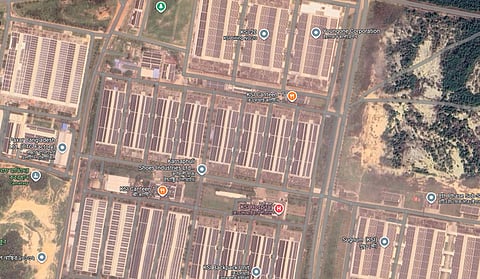
Bangladesh’s C&I rooftop PV gained momentum with the Korean Export Processing Zone (KEPZ), which commissioned 16 MW of rooftop solar PV capacity in 2021. It was built on a CapEx model, fully sponsored by KEPZ, and also incorporated Net Energy Metering (NEM) benefits. This project acted as a role model for other industries in the region and continued the momentum. Following the success of KEPZ, other textile companies also followed suit:
Apart from rising grid electricity cost savings, the rapid expansion of rooftop PV was also driven by other factors:
Reduced PV system payback period
Carbon emissions incentives by global clients
Load shedding and grid issues
LNG shortage
Increasing diesel price
International investor interest remains robust in Bangladesh, particularly in energy-secure industrial zones. And this has been seen in some of the recent transactions, too. On April 6, 2026, the Bangladesh Export Processing Zones Authority (BEPZA) signed a land lease agreement with PH Creative, a South Korean company that has invested $24 million. The company is expected to run its operations with either existing or new solar PV installations in the vicinity.
Mr. Mostafa Mahmud, President of the Bangladesh Sustainable and Renewable Energy Association (BSREA), said, “Among all renewable energy options, rooftop solar represents the fastest and most practical opportunity for Bangladesh. The country’s commercial buildings, industries, EPZs, educational institutions, hospitals, railways, and government facilities collectively possess enormous, untapped rooftop potential. The BSREA’s recommendations emphasize the need for complete tax exemption on rooftop solar equipment, long-term low-interest green financing, digitized net metering approvals, and mandatory rooftop deployment targets across public institutions. This is especially important because Bangladesh’s export-oriented industries are increasingly facing global ESG, carbon compliance, and CBAM requirements from international buyers. Renewable electricity is no longer only an environmental issue, it is becoming a trade competitiveness issue.”
The BSREA has also submitted its policy recommendations recently to the Ministry of Power, Energy and Mineral Resources to outline a comprehensive national roadmap for accelerating renewable energy deployment, attracting investment, strengthening grid resilience, and ensuring sustainable energy security.
Bangladesh’s utility‑scale solar journey began with the commissioning of the 28 MW Technaf Solar Plant in 2018, funded by the Asian Development Bank (ADB). It was then followed by the 35 MW Spectra Solar Park in 2021, also backed by ADB. This early phase already revealed a structural challenge of long gaps of 2 to 3 years between new project announcements and commissioning. It also reflected weaknesses in project execution, approvals, and land readiness.
Following the completion of the Sirajganj and Pabna solar parks in 2024 and 2025, respectively, the government announced and awarded several new utility-scale projects to developers. However, most of these projects have since encountered persistent hurdles, particularly related to land acquisition, environmental clearances, and tariff viability. The 100 MW Madarganj Solar Plant illustrates these challenges clearly, as the Ministry of Power suspended construction on August 20, 2025, citing inflated project costs, an unviable PPA tariff, and concerns over site suitability.
Compounding these project-level challenges, political uncertainty has emerged as a critical constraint on large-scale solar development. The change in government has triggered policy discontinuities, resulting in delays, suspensions, or outright cancellations of several projects awarded prior to 2025. This growing lack of project certainty has eroded investor confidence, disrupted the development pipeline, and slowed the pace of utility-scale solar deployment.
Under the Revised Renewable Energy Policy 2025, the government has announced plans to install 10 GW of solar capacity by 2030. To achieve this target, the government already has the following incentives in place:
Net Energy Metering: In 2018, the government introduced NEM, under which rooftop PV system owners can export excess electricity to the national grid and draw electricity from the grid at a fixed tariff through a bidirectional meter. At the end of each billing cycle, the consumer pays only for the net imported electricity and is also paid for any excess electricity exported.
Income tax holiday: Effective July 1, 2025, to June 30, 2030, the government is providing 100% income tax holiday for 10 years, followed by 50% for the next 3 years, and finally 25% for 2 years. This applies to individuals as well as companies.
SREUP: This is a government program to support safety retrofits and environmental upgrades in the textile industry’s Ready-Made Garment (RMG) sector through low-cost loans and incentive grants implemented by Bangladesh Bank. Agence Francaise de Developpement (AFD) has provided a €50 million credit facility, and KfW Development Bank provided a €14.29 million grant for the scheme.
Under the Renewable Energy Policy 2025, the government has renewed its emphasis on floating solar photovoltaic (FPV) projects as a means to overcome land constraints that have historically impeded utility-scale solar development. By proposing the allocation of state-owned riverbanks, reservoirs, and lakes for FPV installations, policymakers view floating solar as a more politically and socially acceptable alternative, given that it does not compete with scarce agricultural land.
However, Bangladesh’s early experience with FPV highlights the gap between policy ambition and on-ground execution. As early as 2020, a flagship FPV project at Mahamaya Lake, announced in January and sponsored by the Bangladesh Power Development Board (BPDB) in collaboration with the Ministry of Power and Energy and the Asian Development Bank (ADB), was cancelled despite having secured government clearance. The project was ultimately shelved in December 2020 due to concerns over environmental impact and potential disruption to the lake’s ecosystem, underscoring the regulatory and environmental sensitivities associated with large-scale FPV deployment.
Since then, FPV progress has largely been driven by small, privately developed projects rather than government-sponsored initiatives. In 2023, Joules Power commissioned a 0.7 MW FPV system for the Nawab Group, supplying electricity to a rice mill during load shedding and exporting surplus power to the grid under net metering. This was followed by Walton Group’s 1 MW FPV project commissioned in 2025, which similarly feeds electricity into the grid. Beyond these isolated private installations, there has been little momentum in public-sector FPV development, suggesting that while FPV is increasingly supported in principle, scaling it up will require clearer environmental frameworks, stronger institutional coordination, and sustained policy follow-through.
Land availability: To address land-related constraints, the government has introduced a new policy framework under which unutilized state-owned land is to be allocated for utility-scale solar development through a public-private partnership (PPP) model. However, progress has been limited by the absence of systematic identification and disclosure of such land parcels. If the government undertakes a transparent mapping exercise and publishes land availability details alongside future large-scale solar auctions, it could significantly reduce project uncertainty, accelerate project execution, and catalyze stronger investor participation.
Solar PV Charging Infrastructure: At present, most LEVs in Bangladesh rely on the national grid for battery charging, often during peak-demand hours, which further strains an already stressed electricity system. With the government targeting 30% electric-car penetration by 2030 under the National Climate Plan, the urgency of deploying solar PV-powered charging stations has increased. Developing solar-powered charging infrastructure, alongside supporting grid and storage solutions, would help shift transport electrification to cleaner energy sources and reduce peak-hour grid dependence, while lowering long-term exposure to fossil fuels.
Rooftop PV Mandate: The government should mandate rooftop solar installations on all state-owned buildings, both existing and new, to reduce reliance on the grid and enhance energy resilience. This requirement should be extended to critical infrastructure such as healthcare facilities and the banking sector, covering both public and private institutions, where an uninterrupted power supply is essential for economic stability and public welfare.
Agricultural Sector: According to government data, around 1.3 million irrigation pumps run on diesel gensets in the country. These pumps can be easily converted to solar pumps, helping reduce diesel use in the agricultural sector. However, this sector is lagging due to insufficient government support and incentives.
Grid Infra Development: Bangladesh’s grid infrastructure remains structurally outdated, limiting its ability to efficiently transmit, distribute, and manage electricity. Weak transmission capacity, congestion, and inadequate system management exacerbate outages even when generation capacity is available. Until investments in transmission upgrades are complemented by smart grid adoption and institutional reforms, adding new power plants alone will be insufficient to resolve recurring supply disruptions.
Bangladesh’s PV installations are projected to increase from 1.3 GW in 2025 to approximately 3.6 GW by 2030, implying a steady annual addition of around 450-500 MW. This trajectory would bring cumulative installed capacity to roughly 3.7 GW by 2030, significantly undershooting the government’s stated 10 GW solar target.
Growth is expected to follow a largely linear year-on-year pattern, with demand led by the C&I rooftop segment, followed by utility-scale ground-mounted and floating solar projects. Residential uptake is likely to remain limited due to continued government subsidies for grid electricity, which weaken the economic case for rooftop PV. However, the introduction of targeted subsidy schemes for residential solar could materially accelerate adoption, potentially driving installations beyond current forecast levels.
