

Boway Alloy will divest 100% of Boviet Solar’s US subsidiary in North Carolina after securing board approval
It attributes the decision to stricter US rules, including FEOC-linked provisions, that risk IRA tax credits for Chinese-linked firms in the US
Boviet Solar says its US operations remain unchanged, and so does its market focus
China-headquartered Ningbo Boway Alloy Materials has received board approval to exit its investment in Boviet Solar US. As part of this decision, the company plans to sell 100% ownership of its wholly owned US subsidiary, Boviet Solar Technology (North Carolina) LLC.
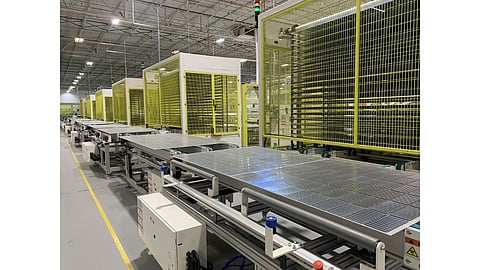
Vietnam-headquartered solar PV manufacturer Boviet Solar operates manufacturing facilities in both Vietnam and the US. In the US, Boviet Solar operates a 3 GW solar PV module manufacturing facility in North Carolina’s Greenville, and plans to bring online a 3 GW solar cell manufacturing facility in 2026 (see Boviet Solar Boosts US Module Manufacturing Capacity 1 GW).
Boway Alloy, the Chinese non-ferrous alloy materials manufacturer listed on the Shanghai Stock Exchange, acquired 100% stake in Boviet Solar in 2016 that marked its entry into solar PV manufacturing.
The Chinese group is considering exiting Boviet Solar's US business after the country introduced stricter compliance and regulatory rules for the solar PV sector under the One Big Beautiful Bill Act (OBBBA). These include provisions related to Foreign Entities of Concern (FEOC), which apply to companies supplying to the US solar manufacturing industry including those linked to countries like China.
Using material assistance from a prohibited foreign entity (PFE) under the FEOC rules disqualifies a company from accessing Inflation Reduction Act (IRA) tax credits for manufacturing or PV deployment. Chinese ownership of Boviet Solar fall would fall under this category.
In a stock exchange filing, Boway said it fears that this may increase compliance risk, potentially affecting the operations and future growth of its US business. Hence, it has decided to offload its entire stake in the US subsidiary and protect shareholder interests, explains the company.
Earlier this year in February 2026, Boway said it was exploring strategic alternatives for its solar business as part of a broader portfolio realignment, following ongoing trade and policy challenges, including US tariffs and changes to subsidy rules, which it said are affecting its investment decisions.
However, Boviet Solar affirmed its commitment to US solar manufacturing saying that the shareholder-level considerations do not change its day-to-day operations or market focus.
It also added, “Boviet Solar also notes that appropriate ownership alignment can support continued access to capital for manufacturing investment, workforce development, quality systems, and supply-chain oversight, while reinforcing transparency, traceability, and ESG-related expectations that are increasingly relevant across the solar industry.”
Earlier, Trinasolar sold its solar PV module manufacturing facility in the US to T1 Energy, previously Freyr Battery (see Amid ‘Geopolitical Risks’, Trinasolar Sells Off 5 GW US Solar Module Plant). Another Chinese manufacturer JA Solar also sold its stake in 2 GW Arizona factory to Corning (see North America Solar PV News Snippets).
