

Abu Dhabi’s DoE has introduced a Solar PV Self-Supply Policy to expand distributed solar PV and battery energy storage systems
The policy allows customers to generate electricity for self-consumption, improve daytime efficiency, and rely more on clean energy
Customers can choose flexible solutions such as rooftop solar, solar water heaters, and optional battery storage
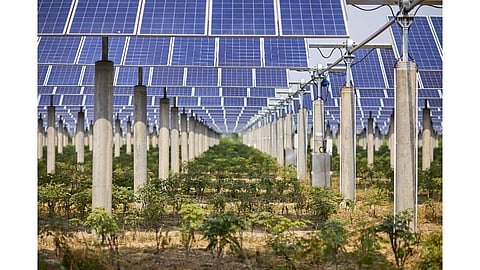
Phase I will focus on agricultural customers and owners of rest houses and ranches
The Abu Dhabi Department of Energy (DoE) has introduced the Solar (Photovoltaic) Energy Self-Supply Policy, which will boost the uptake of distributed solar PV (DPV) and battery energy storage systems (BESS).
It will enable customers to improve daytime electricity efficiency and increase reliance on clean and renewable energy sources by adopting smart, flexible energy-consumption solutions, explains the DoE. It will also improve grid efficiency and enhance supply security for Abu Dhabi.
“While utility-scale solar PV and BESS will continue to be deployed through coordinated system planning and procurement, fully realising the benefits of a solar-led supply mix requires the distribution network and end-consumers to become active participants in system optimization,” reads the policy document.
Customers may continue to source grid-supplied electricity or choose flexible solutions, defined as solar panels for self-supply and self-consumption of electricity, in addition to solar-powered water heaters, with the option to add BESS.
Phase I of the policy will be rolled out for the agricultural segment and owners of rest houses and ranches. Aligned with the Abu Dhabi Climate Change Strategy, the new policy will promote cost-effective deployment of clean energy solutions.
“The policy reinforces our efforts to establish a strategic mix of energy generation sources, particularly renewable energy, and enables the local community to play a key role in supporting national efforts to achieve the ambitious targets set out in the Abu Dhabi Energy and Water Efficiency Strategy 2030,” said Abu Dhabi DoE Director General of Regulatory Affairs Abdulaziz Mohammed Al Obaidli.
Clear governance and licensing frameworks are required to ensure safe, transparent customer participation to reduce reliance on high-emissions peaking generation during critical hours.
The DoE added that the new policy is part of a broader set of enabling policies and guidelines to promote sustainability across different consumer segments, and that it plans to announce additional policies throughout 2026.
