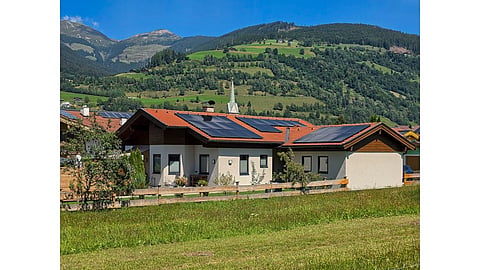


Austria issued around 43,300 application tickets in the first 10 minutes of its final 2026 solar subsidy funding call
The government has increased the round’s budget to €38.5 million using funds released from incomplete projects
It plans to replace the current subsidy arrangement with a new funding model from 2027 which will give greater weight to battery storage
Austria received around 43,300 application tickets within 10 minutes of opening its final solar PV subsidy round for 2026. The strong demand has highlighted pressure on the existing funding system, which the government plans to replace with a continuous application process from 2027.
The Austrian Ministry for Economic Affairs, Energy and Tourism increased the budget for the latest funding round from €8 million to €38.5 million. The revised amount includes unutilized funds from allocations for earlier projects that were not completed or were only partly implemented.
“The total funding volume for photovoltaic systems and electricity storage will thus reach 128.5 million euros in 2026,” states the ministry.
The funding call started on October 8, 2026. Around 19,600 application tickets were issued in the first minute and 40,800 in five minutes. After 10 minutes, the number increased to around 43,300. In comparison, in the previous call, a total of 24,900 applications were submitted.
The latest call offers subsidies for new or expanded solar PV systems and associated energy storage facilities. Applications will be accepted until October 22, 2026. Details of the call are available on the dedicated Renewable Energy Expansion Act (EAG) portal.
The ministry said the high demand underscored the need to change the current system, under which applicants compete for limited funding during specific application windows.
From 2027, Austria plans to introduce a continuous application process. Under the proposed model, applicants would be able to apply after completing their projects and receiving the final invoice, rather than competing to secure funding when a call opens
Through the revised funding model, the government aims to make funding more predictable and reduce the amount of money tied up in projects that are never fully implemented. It would also place greater emphasis on battery storage and energy management system (see Austria Launches ‘Storage Offensive’ As Solar Output Peaks).
“The fact that so many remaining funds can now be reallocated shows how much money was tied up in projects that were not implemented or only partially implemented. We are changing that,” said State Secretary for Energy Elisabeth Zehetner. “Anyone who actually realizes their project should have access to funding. This makes funding more reliable for customers and the use of funds more efficient.”
The new funding framework is still being finalized. The government is preparing the necessary legislative amendment, which requires a two-thirds majority in parliament, shared Zehetner.
