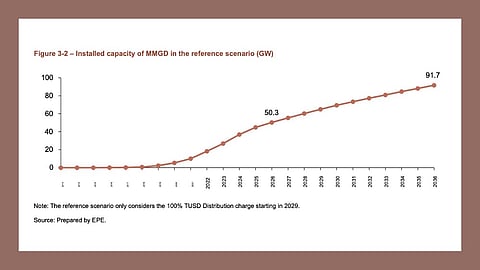


Brazil projects its distributed generation capacity, including rooftop solar, is projected to reach 92 GW by 2036
Solar and wind are expected to account for about one-third of electricity generation by 2036, while renewables maintain nearly 90% of the generation mix
The plan projects 7.2 GW of battery storage, 4 GW of demand response capacity and 2 GW of pumped-storage hydropower by 2036
Brazil’s installed micro and mini distributed generation capacity is projected to reach 92 GW by 2036, up from around 50 GW in 2026, according to the draft Ten-Year Energy Expansion Plan (PDE 2036) released by the country’s Energy Research Office (EPE) and the Ministry of Mines and Energy (MME).
The sector is expected to serve 13.5 million adopters and deliver an average generation of 14.1 GW. It is projected to attract BRL 96 billion in cumulative investments between 2027 and 2036, with residential systems accounting for 41 GW of installed capacity by 2036.
The PDE 2036 is an indicative planning document prepared annually by EPE under MME guidelines. It outlines projections for Brazil’s energy supply and demand over the 2027–2036 period. It projects continued growth in renewable energy, alongside increased investment in energy storage and other flexibility resources to support the country’s changing electricity mix.
Renewable sources are projected to maintain a share of nearly 90% in Brazil’s electricity generation mix over the plan period. Solar and wind together are expected to account for about one-third of electricity generation by 2036, up from 28.1% in 2026.
The plan also forecasts a rise in overall electricity generation to 1,133 TWh in 2036, from 829 TWh in 2026. According to the estimates, Brazil’s electricity consumption is expected to grow by an average of 3.4% annually, reaching 979 TWh by 2036. Growing demand from electric vehicles, data centers and industrial electrification is expected to contribute to this increase.
Electricity consumption by data centers alone is projected to rise from 3 TWh in 2026 to 30 TWh in 2036. Recently, the Brazilian Senate approved tax incentives for data centers, tying these to renewable energy generation and use (see Brazil Senate Ties Data Center Tax Breaks To Renewables).
The PDE 2036 projects 7.2 GW of battery energy storage capacity by 2036. It also includes 4 GW of demand response capacity and 2 GW of pumped-storage hydropower in its indicative expansion outlook. These resources are expected to improve the power system’s flexibility as variable solar and wind generation expands.
Batteries can store electricity and return it to the grid when needed. Demand response can shift electricity consumption in line with system conditions, while pumped-storage hydropower can move large volumes of energy between periods of lower and higher demand.
The plan also projects substantial transmission expansion to support the changing electricity system. Between 2026 and 2036, Brazil is expected to add 31,900 km of transmission lines and 99,600 MVA of transformer capacity.
Brazil estimates approximately BRL 3.3 trillion in investments across Brazil’s energy sector between 2027 and 2036. It is intended to guide public policy and inform investment decisions by public and private sector participants.
Published earlier this month, the draft summary report is open for public consultation until November 6, 2026.
