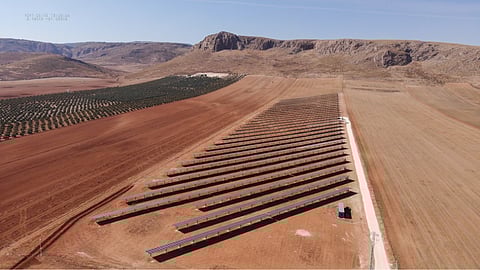


Egypt plans to add 3 GW of solar capacity in 2026 and 600 MW of new battery energy storage before summer
Authorities expect power demand to rise 6%–7% in summer, with battery storage helping stabilize the grid and ensure an uninterrupted supply
The plans support Egypt’s 2030 renewable energy target, with President Abdel Fattah El-Sisi calling for continued renewable expansion
To address the expected increase in electricity demand this summer, Egypt has announced plans to add 3 GW of solar energy to the grid in 2026. The plans also aim to add 600 MW of new battery energy storage system (BESS) capacity before the onset of summer, which will expand the total available on-grid storage capacity to 1.1 GW.
Egypt estimates a 6% to 7% increase in power demand during the summer months. The addition of BESS will help stabilize the grid while ensuring a continuous electricity supply.
These plans are aligned with the country’s target to reach a minimum of 42% of renewable energy share in its power mix, by 2030 at the latest. In a recent meeting with the Egyptian President Abdel Fattah El-Sisi, the Minister of Electricity and Renewable Energy, Mahmoud Esmat, shared that the country has already met a significant portion of this target, ahead of schedule.
The President stressed the need to continue expanding renewable energy projects and reduce reliance on fossil fuels. Sisi also emphasized the need for the country to localize the electrical equipment manufacturing industry.
With its strategic location and supportive regulatory environment, Egypt is emerging as a renewable energy manufacturing hub in the Middle East and Africa region. Recently, EliTe Solar commissioned its 5 GW integrated solar cell and module factory in the country. Chinese companies GCL, Cornex, and TBEA also plan to establish GW-scale solar cell (5 GW), BESS (5 GWh), and inverter manufacturing plants in Egypt, respectively (see Middle East & Africa Solar PV News Snippets).
At the end of 2024, Egypt’s total installed renewable energy capacity stood at 7.75 GW, comprising 2.57 GW of solar PV, according to the International Renewable Energy Agency (IRENA).
