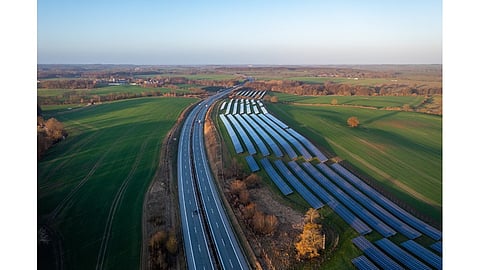


A new Fraunhofer ISE guidance estimates that Germany's degraded agricultural peatlands could accommodate 134-268 GW of PV capacity
It recommends restricting peatland PV projects to degraded agricultural peatlands
The report highlights significant research gaps before the technology can be deployed at scale
Germany's degraded agricultural peatlands could support between 134 GW and 268 GW of solar PV capacity, according to a new guidance published by the Fraunhofer Institute for Solar Energy Systems (ISE).
While the country's total technical solar PV potential for ‘peatland PV’ is estimated at 560-1,120 GW, the lower figure reflects land considered suitable for peatland PV after excluding protected and other restricted areas. It could support the country in achieving its 400 GW solar PV target by 2040, highlight the authors of the guidance.
Peatlands cover about 5% of Germany's land area, mainly in the North German Plain and the Alpine foothills. Since most of these have been drained, they are difficult to identify. However, peatlands are estimated to contribute nearly 7% of the country's GHG emissions. The guidance says restoring these peatlands could help reduce emissions while creating additional space for renewable energy projects.
According to the guidance, Germany has supported electricity generation on permanently rewetted peatlands under the Renewable Energy Sources Act (EEG) since 2023. Combining solar installations with the rewetting of degraded peatlands could help the country reduce GHG emissions while providing an additional income source for landowners and easing land constraints for expanding renewable energy.
“Currently, around 70% of all formerly intact peatlands in Germany have been drained for agricultural use; they cause almost 7% of Germany's total greenhouse gas emissions,” said Agnes Katharina Wilke, Project Manager of the MoorPower research project at Fraunhofer ISE.
Germany plans to rewet around 50,000 hectares of degraded peatland annually to help achieve its climate targets. However, the authors highlight that the potential is much greater, as the amount of degraded agricultural peatland in the state of Mecklenburg-Vorpommern alone – not subject to nature conservation restrictions – amounts to 85,000 hectares.
The guidance says peatland PV projects require permanent rewetting, as drained peatlands would continue emitting greenhouse gases and reduce the overall climate benefits of solar installations. Authors recommend that peatland PV projects be developed only on drained, highly degraded agricultural peatlands and not on ecologically valuable peatlands or legally protected areas.
“It is important to only develop drained and highly degraded areas for the dual use of peat soils and photovoltaics. Peatlands and peat soils of ecological value within legally protected areas should be excluded,” said Franziska Tanneberger, head of the Greifswald Moor Centre.
The authors note that experience with peatland PV remains limited both in Germany and internationally. They say further research is needed on integrating solar projects with rewetting and paludiculture, as well as on long-term operation, maintenance, and environmental impacts.
Prepared with the Greifswald Moor Centre, Humboldt University of Berlin, the University of Göttingen's Institute for Agricultural Law, and law firm Becker Büttner Held (BBH), the guidance is intended for farmers, solar developers, public authorities, and other stakeholders. It outlines technical, legal, and environmental recommendations for developing solar projects on permanently rewetted peatlands while supporting climate and renewable energy goals.
It covers the planning, construction, operation, and eventual decommissioning of peatland PV projects, while discussing their potential, technical challenges, and legal framework.
The complete guidance in German, titled Moor-PV: Doppelter Klimaschutz durch Photovoltaik-Systeme auf wiedervernässten Moorböden, is available for free download on Fraunhofer ISE’s website.
In an earlier report, Fraunhofer ISE projected Germany’s agrivoltaic potential at 500 GW (see Fraunhofer ISE Pegs Germany’s Agrivoltaic Potential At 500 GW).
