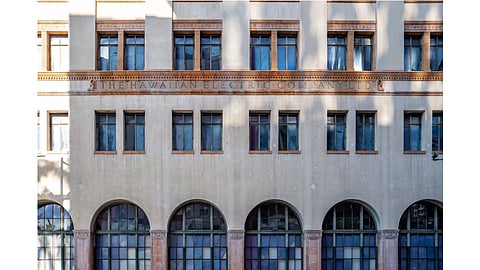


Hawaiian Electric has filed a regulatory proposal outlining large-scale procurement for renewable energy, storage, and firm generation
The proposed portfolio includes renewable generation, battery storage, and dispatchable capacity, with projects targeted to enter service between 2031 and 2034
It is also seeking approval to consider additional firm generation on the island of Oʻahu
Hawaiian Electric, the largest electric utility in the US state of Hawaiʻi, has outlined plans to launch one of the state’s largest energy procurements for renewable energy, battery storage and firm generation.
As per its Integrated Grid Planning Request for Proposals (IGP RFP) filed with the state’s Public Utilities Commission (PUC) as part of the regulatory approval process, the utility has proposed a competitive procurement process across Oʻahu, Hawaiʻi Island, and Maui. The utility stated that this capacity will enable it to meet growing electricity demand, modernize the generation fleet, and reduce reliance on oil.
Under the proposal, the utility plans to procure about 1,650 GWh of variable renewable energy, including solar and wind; 465 MW of grid-forming resources such as solar paired with battery storage; and 111 MW of firm generating capacity capable of supplying electricity when renewable generation is unavailable.
Eligible projects are expected to be commissioned between 2031 and 2034, subject to the regulatory process.
Hawaiian Electric also plans to seek separate regulatory approval to expand the procurement with up to 500 MW of additional fuel-flexible firm generation on Oʻahu. The company said it has requested a ‘transparent, Commission-supervised forum’ to assess the size and fuel requirements of these resources before moving ahead.
In addition, the utility intends to issue a separate RFP covering all fuel options by the end of 2026, allowing different technologies to be evaluated on cost, supply, and environmental impact.
These plans are aligned to support the state’s target to achieve 100% renewable energy for power generation by 2045. In 2025, renewable energy sources accounted for 3,928 GWh or 36.8% of generation. The major chunk, at 47.3%, comes from customer-sited grid-connected solar and wind energy capacity.
According to the utility, the plan would help accelerate the retirement of older oil-fired power plants by replacing them with a combination of renewable energy, battery storage and firm generation.
“Hawaiʻi needs to move faster and we think our expedited procurement plan is the best way to drive competition, evaluate all options and more rapidly build a portfolio that meets the requirements of efficiency, reliability and lower carbon emissions and does it at the least cost," said Scott Seu, CEO of Hawaiian Electric.
Earlier this month, the utility proposed that the PUC designate Kunia/Schofield and Koolaupoko as the state’s two Renewable Energy Zones (REZs) for future solar projects, following extensive analysis and community input. Any future projects in these zones will undergo a rigorous process of community input and environmental review before entering construction.
It recently approved power purchase agreements (PPAs) for the 6 MW Puuloa Solar Project with 30 MWh of battery storage on Oʻahu, and the 40 MW Kuihelani Solar Phase 2 with 160 MWh of battery storage on Maui.
