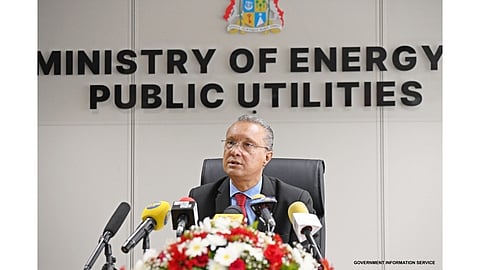


Mauritius plans to add 405 MW of renewable energy and storage over the next 3 years
Solar projects form the core of the expansion, including floating solar, agrivoltaics, and distributed generation facilities
Battery storage gets priority as the Energy Ministry takes steps to utilize all generated power to improve grid stability
Mauritius has unveiled plans to add 405 MW of renewable energy and storage capacity to the grid over the next 3 years as the African nation prepares to mitigate any potential energy crisis. The plan is centered around solar energy.
Among the projects unveiled by the Minister of Energy and Public Utilities is a floating solar PV farm with 17.5 MW to 20 MW capacity at the Tamarind Falls Reservoir. It will be built under a Government-to-Government agreement in partnership with the Indian state-owned utility National Thermal Power Corporation (NTPC).
The Tamarind Falls project has been in the pipeline for the past few years. In October 2023, the Central Electricity Board (CEB) was seeking a consultant to prepare a feasibility study for the project, with a proposed capacity of 30 MW at the time (see Mauritius Exploring Floating Solar Power Plant).
The ministry will expand the Agrivoltaics Scheme to enable planters and livestock farmers to combine agricultural activities with solar energy generation. The program had earlier received 39 applications for the scheme, out of which 18 projects have been approved.
A wind farm will be expanded by adding another 15 MW to 20 MW of capacity.
In distributed energy generation, the plan is to install 100,000 solar kits for households with support from the Indian government, liberalize residential solar systems under 10 kW, and implement a Carbon Neutral Scheme for the commercial sector to facilitate the installation of 20 MW rooftop solar and solar carparks for shopping malls and large enterprises.
The ministry plans to launch a national sensitization campaign to promote responsible electricity consumption and raise awareness about renewable energy.
Hybrid solar and battery energy storage system (BESS) projects are also part of the plan. These will deliver close to 120 MW of PV and 100 MW of storage capacity.
Additionally, 20 MW of battery storage capacity will be installed to meet peak evening demand between 18:00 and 21:00 by July 2026.
Patrick Gervais Assirvaden, the Energy Minister of Mauritius, stressed that only projects incorporating BESS will be prioritized to ensure there is no wastage of electricity. It also plans to bring in regulatory amendments for the same.
He shared that the government plans to further open the electricity sector to private companies and investors to accelerate the deployment of renewable energy. Under the Stor’Sun initiative, 3 private sector hybrid renewable energy projects with a total capacity of 30 MW are expected to be implemented by September this year.
All these measures are part of the government’s plans to address the ongoing energy crisis, which has intensified amid escalating geopolitical tensions in the Middle East.
According to The Meridian journal, earlier in March 2026, Mauritius sought to procure Heavy Fuel Oil (HFO) from India after the Strait of Hormuz closed due to the Middle East crisis and rising oil prices. However, India does not have the kind of HFO that the CEB of Mauritius requires to run its power plants. This has raised fears of potential electricity shortages in the country in the coming days.
Assirvaden says the 405 MW plan will enhance grid stability, facilitate the integration of renewable energy, and ensure a resilient and sustainable future for the country.
By 2020, renewable energy accounted for 23.9% share of Mauritius’ power mix. By 2035, the target is to scale it up to 60%. As of the end of 2025, the country’s total installed renewable energy capacity was 318 MW, including 155 MW of solar PV, according to the International Renewable Energy Agency (IRENA).
