

Sweden’s Midsummer has decided to walk away from €32.3 million in EU support for its 200 MW solar cell project
According to the management, a setback in securing additional Swedish funding changed the economics of the proposed factory
It is now looking at different avenues to expand its manufacturing footprint
Sweden-headquartered solar PV manufacturer Midsummer has put its planned solar cell factory in Sweden on hold and is foregoing €32.3 million in EU funding. The company said financing the project had become challenging.
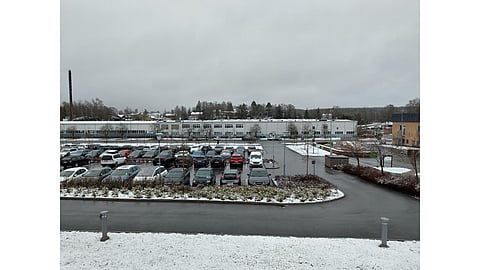
The Swedish solar manufacturer had planned a 200 MW CIGS thin-film solar cell and module factory in Flen to cater to the European market, using its proprietary all-in-one thin-film solar cell coating unit DUO (see Swedish Manufacturer Zeroes In On Solar PV Production Site). In 2023, the European Commission announced €32 million funding for the project under the third EU Innovation Fund (see New Thin Film Module Factory Planned in Europe).
A key setback, explains Midsummer, was the rejection of an expected investment grant from Swedish Energy Agency’s Industriklivet program.
The EU grant would have covered only part of the project cost. Midsummer said it would still need to raise or finance several hundred million Swedish kronor. The company does not want to take on that financial burden.
Eric Jaremalm, Midsummer CEO explained, “Even with the EU contribution, self-financing a completely new factory of this size in Flen would have cost us several hundred million kronor, and we do not find it responsible to take out such large loans or ask our shareholders for such amounts when we have found other ways to finance our expansion, which in addition to being financially more advantageous are also geographically closer to the fastest growing markets today.”
The company is now moving toward an asset-light manufacturing model. Under this approach, industrial partners would finance, own, and operate factories, while Midsummer would provide its production equipment, materials, and technology.
The company said this model would require less capital, allowing the company to expand in markets with stronger demand. Midsummer is already pursuing this approach in Colombia, where it has agreed to supply equipment for a solar cell factory with at least 100 MW of annual capacity. It claims to have secured machinery orders of close to SEK 380 million for the Colombia factory (see Midsummer Weighs Larger Thin-Film Solar Cell Fab In Colombia).
The company is also expanding its own production facility in Bari, Italy, which is planned to reach an annual capacity of 50 MW.
In 2024, Midsummer joined hands with compatriot Saab AB to explore the development of a 200 MW solar cell factory in Thailand (see Sweden’s Midsummer Exploring Thailand For Thin-Film Cell Production).
Midsummer said it has not ruled out a new factory in Sweden. However, it would need more favorable commercial and financing conditions.
“We would be happy to establish a new factory in Sweden in the future when commercial and financial conditions allow it, but it will not happen within the framework of the specific project planned for Flen for which we have been awarded time-limited EU support,” added Jaremalm.
Midsummer’s Flen decision comes amid several setbacks for European solar manufacturing projects that received EU support. REC Group was selected for the second EU Innovation Fund support for a 4 GW heterojunction (HJT) solar panel factory in France. The planned project was later put on hold citing market conditions (see REC Group’s French Heterojunction Factory Plans ‘On Hold’).
Maxeon Solar Technologies also received EU backing to expand its French manufacturing operations. The company later closed its Porcelette plant as market conditions weakened (see Maxeon Solar’s French Production Line Discontinued).
Another European manufacturer, NorSun, secured €54 million from the EU Innovation Fund for a planned expansion of its wafer production in Norway. The company later halted production at its Årdal facility and eventually filed for bankruptcy (see European Solar Wafer Maker NorSun Filing For Bankruptcy).
Alongside Midsummer, Meyer Burger was also one of the winners of the third EU Innovation Fund round, securing €200 million for large-scale cell and module production in Europe. The company later shifted its focus toward the US as European market conditions deteriorated, eventually filing for insolvency for German subsidiaries and shutting down the German module fab (see Meyer Burger Files Insolvency For 2 German Subsidiaries).
Public funding can help finance factories, but it does not guarantee that projects will reach production. In Midsummer’s case, the economics of the Flen project no longer justify the required investment.
Former Meyer Burger CEO Gunter Erfurt made a similar point in a note as he left the company, saying Europe has the technology, skilled workforce, and entrepreneurial capacity to rebuild its solar PV industry, but lacks a sufficiently supportive policy environment.
A November 2025 CETO report said the bloc’s efforts to rebuild its manufacturing base were not keeping pace with global market growth. It called for faster policy action and stable regulations to improve investor confidence and support scaling (see EU Solar PV Manufacturing Still Far From Global Competitiveness).
Industry groups have also called for stronger support as solar manufacturing expands beyond China, particularly in Southeast Asia and India, while the EU lags behind. SolarPower Europe and the European Solar Manufacturing Council have warned that the Net Zero Industry Act (NZIA) alone will not be enough to meet the EU’s target of at least 30 GW of domestic PV manufacturing capacity by 2030 (see EU Solar Industry Calls For Immediate Manufacturing Support).
Midsummer’s decision highlights the continued pressure on Europe’s solar manufacturing ambitions, particularly the difficulty of financing factories that can compete on cost.
