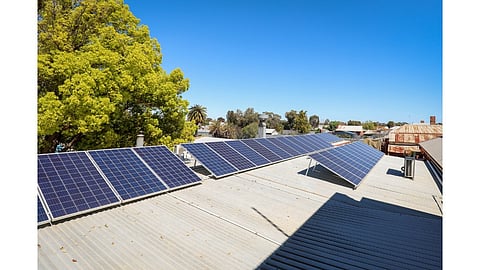


The Smart Energy Council report estimates Australia's underinvested C&I rooftop solar segment could generate electricity equivalent to 10 coal-fired power plants
It recommends raising the STC eligibility threshold from 100 kW to 500 kW or 1 MW and speeding up grid connection approvals
It also proposes stronger support for battery storage, standardized green leases, and greater transparency of network capacity data to encourage investment in this segment
While Australia ranks among the world’s largest rooftop solar PV markets and has a well-established residential sector, investment in commercial and industrial (C&I) rooftop installations – the ‘missing middle’ – has lagged, the Smart Energy Council (SEC) said.
Businesses cite cost savings as one of the major reasons for investing in solar, battery storage, and flexible energy systems. However, the segment covering installations between 100 kW and 30 MW remains significantly underinvested even though the SEC sees it as having the potential to generate energy equivalent to 10 coal power plants.
In its new report titled Unlocking the Missing Middle, SEC identifies outdated regulations, slow grid approvals, collapsed rebates, and landlord-tenant disputes as factors stalling the progress of medium-sized commercial operations in the country.
Based on a review of over 80 studies and a survey of 61 industry members, the SEC report says 71% of survey respondents cited slow sign-offs from network companies as a major barrier. Approvals for grid connections can take up to 5 months instead of the standard 10 days.
Nearly 75% of respondents blame tenant-landlord cost sharing as a major roadblock, while 98% complained that current network prices are not rewarding enough for businesses investing in solar and battery storage.
SEC CEO David McElrea said, “We are engineering under-investment into our own clean energy switch, one big rooftop at a time.”
According to the report, declining federal rebates (from AUD 20.0-AUD 30.0 to AUD 3.00-AUD 4.00 for Large-scale Generation Certificate or LGC) and a 100 kW incentive cap discourage businesses from installing larger rooftop solar systems, causing underinvestment in Australia's C&I rooftop solar market.
This means that even if a business installs a 500 kW rooftop solar system, it can only claim the federal rebate on the first 100 kW under Small-scale Technology Certificates (STC). LGCs are available for systems over 100 kW capacity, but due to lower federal credits, these aren’t economically viable.
“Across multiple practitioners and numerous sites, the same pattern recurs, customers need 200 to 400 kW systems but install 100 kW systems to access STCs, because LGCs at $3 to $4/MWh are not worth the administrative burden and no other viable incentive mechanism exists for mid-scale systems. As a direct result of this structural gap in policy design, Australia's mid-scale solar potential remains largely untapped,” explain the authors.
The report recommends increasing the eligibility limit for Australia's STCs from 100 kW to 500 kW or 1 MW, arguing that the current cutoff encourages businesses to install smaller rooftop solar systems than they actually need.
It also calls for a simplified and faster grid connection process for mid-sized projects, streamlined and nationally consistent connection rules, greater support for battery storage, and reduced regulatory barriers to accelerate C&I rooftop solar deployment.
The report recommends a series of immediate and short-term policy reforms to accelerate C&I rooftop solar deployment. Immediate priorities include standardizing and speeding up distribution network connection processes with enforceable timelines, and increasing the Small-scale Renewable Energy Scheme (SRES) eligibility threshold from 100 kW to 500 kW or 1 MW.
Short-term recommendations include introducing accelerated depreciation for solar and battery assets, establishing a Large-scale Generation Certificate (LGC) price floor or a mid-scale support mechanism, and developing standardized green lease frameworks to address landlord-tenant split incentives. The report also recommends mandating greater transparency of network and hosting capacity data.
The complete report is available for free download on SEC’s website.
