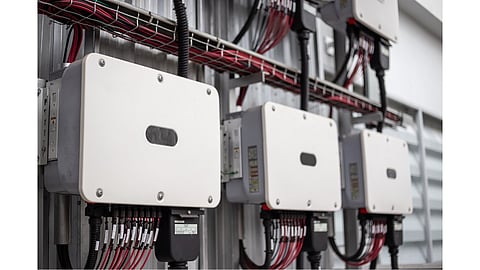


The FCC has added foreign-produced power inverters to its Covered List, restricting equipment authorization for new models over national security and cybersecurity concerns
Existing FCC-authorized inverter models and previously purchased products remain unaffected
Inverter manufacturers seeking access to the US market can seek Conditional Approval by meeting US supply chain and domestic manufacturing requirements
The US has effectively barred new foreign-produced power inverter models from entering the domestic market after the Federal Communications Commission's (FCC) Public Safety and Homeland Security Bureau added these products to its Covered List under Section 2 of the Secure Networks Act, citing national security and cybersecurity risks.
The action follows a national security determination by a White House-convened interagency body of the Executive Branch. It concluded that foreign-produced power inverters, regardless of the nationality of origin, pose an ‘unacceptable risk’ to US national security and the safety of US persons. While the determination is country-neutral, it is widely viewed as primarily targeting Chinese suppliers that dominate the global inverter market. Reuters had previously reported the country drafting rules to this effect (see US Reportedly Eyeing Ban On Chinese Solar Inverter Imports).
The decision means new foreign-produced inverter models and advanced robotic devices will generally not receive FCC equipment authorization required for import, marketing, and sale in the US. FCC equipment authorization is required before covered electronic devices can be imported, marketed or sold in the United States.
Power inverters convert direct current (DC) into alternating current (AC) electricity and are widely used in solar PV and battery energy storage systems (BESS), as well as other inverter-based energy resources. In solar applications, they are often described as the ‘brain’ of the system.
According to the US government, the US grid currently relies on more than 46 GW of inverter-based electricity generation. Over the next 12 months, the US Energy Information Administration (EIA) expects inverter-based resources, namely utility-scale solar and battery storage capacity, to grow by a combined 58.6 GW.
The US market continues to rely heavily on foreign-produced inverters and inverter components despite having local power inverter manufacturers. In 2020, only 7% of inverter shipments in the US came from US-headquartered manufacturers. According to Wood Mackenzie, China’s Huawei and Sungrow together accounted for 55% of global inverter shipments in 2025, and that 9 out of the top 10 suppliers were headquartered in China. This illustrates why the policy is expected to have its greatest impact on Chinese suppliers despite its broader legal scope (see US Reportedly Eyeing Ban On Chinese Solar Inverter Imports).
According to the FCC determination, the lack of a secure domestic inverter supply chain and the growing use of connected inverters on the US grid could increase exposure for critical infrastructure to cyberattacks. It said remote connectivity could allow malicious actors to disable inverters, collect and exfiltrate data, facilitate surveillance, or gain unauthorized access to energy systems.
“Any unanticipated manipulation or disruption of the supply of power inverters or of the inverters themselves would likely compromise the United States’ electricity supply and by extension threaten the economic prosperity and national security of the United States,” according to the US administration.
The FCC said the restrictions apply only to new product models seeking equipment authorization. Existing inverter models already approved by the FCC, as well as products already purchased by consumers, are not affected. Retailers can also continue selling previously authorized models.
It offers manufacturers of such products the option to apply for Conditional Approval from the Department of War (DoW) or the Department of Homeland Security (DHS). Applicants must provide detailed information on their ownership, supply chain, software, manufacturing operations, and plans to establish or expand manufacturing in the US.
Products receiving Conditional Approval will remain eligible for FCC authorization. Applications must be submitted by January 1, 2028. Companies that violate the terms or misrepresent information will have their Conditional Approval terminated (if granted). They will also be barred from applying again.
While the immediate impact of this policy will likely be limited since existing approved products remain unaffected, it may have medium- and long-term implications for the US solar industry. Developers may need to diversify their supply chains and could face longer lead times as manufacturers adjust to the new requirements. This could increase costs for utility-scale projects in the near term while domestic manufacturing capacity expands.
The policy could also encourage foreign manufacturers to establish production in the US, reinforcing ongoing efforts to expand domestic inverter manufacturing in the United States. As of July 2026, SEIA reports that the country’s domestic inverter manufacturing capacity has reached 55 GW AC (see SEIA Calls For Cybersecure, US-Made Solar & Storage Industry).
The move also underscores the growing importance of cybersecurity and supply chain transparency in inverter procurement decisions.
The news of the US exploring a possible ban on solar inverters follows the European Union (EU) decision to block funding for solar PV and battery storage projects using inverters from high-risk countries. However, there is no written guidance from the European Commission on the matter, causing deep uncertainty in the industry, says SolarPower Europe (see SolarPower Europe Seeks Clarity On EU Inverter Funding Ban).
