

Reliability remains one of the most important differentiators in the photovoltaic industry, particularly at a time when manufacturers are operating under unprecedented cost pressure. The latest Kiwa PVEL PV Module Reliability Scorecard highlights both the progress the industry has made in reducing traditional degradation mechanisms and the challenges that have emerged as manufacturers continue to optimize materials, designs, and production costs. While modern glass-glass and multi-busbar modules are showing lower degradation in several stress tests, rising failure rates due to delamination, module breakage, and junction-box performance point to a growing need to balance cost competitiveness with long-term reliability.
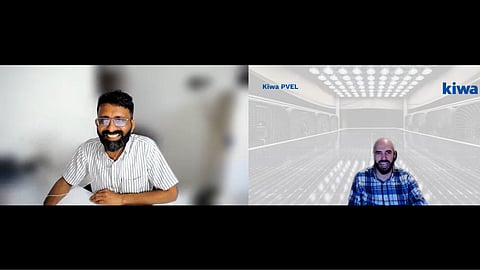
In this interview with TaiyangNews, Tristan Erion-Lorico, Vice President of Sales and Marketing at Kiwa PVEL, provides his perspective on the key findings from the 2026 Scorecard. The discussion covers technology trends, the growing participation of Indian manufacturers, the industry’s evolving understanding of UVID, the impact of new manufacturing facilities on module performance, and the broader implications of today’s highly competitive market environment for module quality and bankability.
TaiyangNews: The latest PV Module Reliability Scorecard names 43 manufacturers as Top Performers in one or more test categories. How many manufacturers were evaluated overall in this edition?
Tristan Erion-Lorico: We do not disclose the total number of manufacturers tested. To protect participating companies, we only identify those that achieve Top Performer status. It is relatively uncommon for a manufacturer to complete the full Product Qualification Program (PQP) without achieving Top Performer status in at least one test category. At the same time, some manufacturers that qualify in only one or two categories choose not to be listed, as they believe partial recognition may not reflect their overall performance.
As a result, we do not publish statistics showing how many manufacturers were tested versus how many achieved Top Performer status. We do provide those comparisons for individual tests, but not for the overall participant pool.
TaiyangNews: Can you provide some context around this year’s results?
Tristan Erion-Lorico: Certainly. Last year, 50 manufacturers were named as Top Performers. This year, that number declined to 43. However, the story is more dynamic than a simple numerical reduction would suggest.
Among this year’s 43 Top Performers, 13 companies are first-time top performers that weren’t in any previous Scorecard. At the same time, 20 manufacturers that appeared in last year’s scorecard are absent this year. That highlights how dynamic the list is.
TaiyangNews: Why do you think so many manufacturers that appeared in last year’s Scorecard are missing this year?
Tristan Erion-Lorico: Some of this is undoubtedly speculation, but there are several contributing factors.
First, participation in PQP testing has become increasingly global. Historically, the program was largely focused on manufacturers supplying to the US market. Over the last 4-5 years, however, we have seen strong participation from companies with little or no interest in selling into the US.
India is a good example. Historically, we had only a handful of Indian participants, including Adani, Vikram Solar, and later Waaree. Today, there are 19 Indian manufacturers participating in PQP testing. Many of them are focused primarily on the domestic market and use PQP testing to demonstrate product quality and reliability to local customers.
We also see participation from manufacturers active outside the US market, including Tongwei and Jolywood. For these manufacturers, independent reliability testing remains valuable regardless of their target geography.
Another factor is the industry’s current financial environment. Module manufacturers have been operating under intense margin pressure. Third-party testing is definitely a cost element; it represents an investment, and some companies may be reluctant to commit resources when profitability is under strain.
At the same time, testing can expose the consequences of aggressive cost reduction strategies. Across the industry, we have seen moves toward thinner frames, thinner encapsulants, alternative materials, and other measures intended to lower module costs. Independent testing, in some cases – I don’t want to generalize here, and it is not applicable to everyone – can reveal corner-cutting approaches adopted to reduce costs and the associated reliability trade-offs. A few others participate and discover that the results are less favorable than they expected. Both factors likely contribute to the changing composition of the Top Performer list.
TaiyangNews: While some manufacturers may be dropping out, the emergence of new Top Performers is also encouraging. It suggests that quality remains a priority for new entrants. Can you share more about the technology and geographic distribution of the modules represented in this year’s Scorecard?
Tristan Erion-Lorico: The dataset is dominated by glass-glass TOPCon modules. In fact, we are at a historic low in terms of glass-backsheet representation. Only about 9% of the modules included in this year’s dataset were glass-backsheet products. Just a few years ago, that figure was closer to 50%. When I first started working on the scorecard in 2018, the situation was almost the opposite: glass-glass modules accounted for only a small fraction of the products tested.
From a cell technology perspective, TOPCon clearly dominates the dataset. We continue to see some participation from heterojunction (HJT), but much less than in previous years. Canadian Solar was the only HJT manufacturer recognized as a Top Performer this year. We have seen stronger participation from companies such as Huasun, Jetion, Golden Solar, and Akcome in past years, but those manufacturers did not participate this time.
We are also seeing growing representation from back-contact (BC) technologies. Both LONGi and AIKO achieved Top Performer status with BC products. While it is encouraging, BC remains concentrated among a relatively small number of manufacturers. And although many companies are showcasing BC products, large-scale mass production remains largely limited to a few players.
PERC remains present as well, primarily in products targeting the US market, where intellectual property concerns surrounding TOPCon continue to influence technology choices. Overall, however, this year’s scorecard is very much a TOPCon story. The technology’s dominance is stronger than in any previous edition.
TaiyangNews: And geographically?
Tristan Erion-Lorico: China remains by far the largest represented manufacturing base in the dataset. India is the second-largest contributor and continues to expand its presence significantly.
Beyond China and India, we see a smaller number of modules manufactured in Southeast Asia and the US. But in terms of overall representation, China remains the clear leader, followed by India.
TaiyangNews: One of the most interesting findings in this year’s Scorecard is that power degradation decreased in several stress tests, while overall failure rates reached record highs. How do you explain this contrast?
Tristan Erion-Lorico: In many ways, the industry has made tremendous progress in addressing traditional degradation mechanisms.
The transition to glass-glass construction has significantly reduced moisture ingress compared to glass-backsheet modules. At the same time, multi-busbar cell designs have improved electrical redundancy. If a solder connection is imperfect on a modern multi-busbar module, there are still many alternative current paths available. That was not the case with older 3- or 5-busbar designs, where a single defective connection could have a much larger impact on performance.
Similarly, glass-glass construction has dramatically reduced susceptibility to microcracks. We have conducted some rather unconventional experiments to intentionally create cracks in glass-glass modules, and in many cases, the glass itself breaks before the cells do.
As a result, we are seeing lower degradation across several key stress tests, including thermal cycling, damp heat, PID, and increasingly UVID. From a power-loss perspective, these are positive developments for the industry.
On the other hand, many of the traditional safety margins built into module designs have been reduced. We are seeing junction boxes operating with a smaller current-rating margin relative to module output, contributing to increased diode and junction-box-related failures. We are also seeing thinner encapsulants, thinner frames, thinner glass, and reduced use of protective materials around critical interfaces.
One particularly concerning trend is the increase in delamination defects. In many cases, power degradation remains low after testing, but significant bubbling develops along the module perimeter due to insufficient encapsulant at the edges. While it may not immediately affect power output, it poses serious reliability and safety concerns. These bubbles can compromise electrical insulation and create conditions that may eventually lead to arcing or fire. Our colleagues at Kiwa have investigated field incidents where module fires were linked to precisely these kinds of defects.
So while the industry deserves credit for reducing power degradation, we cannot ignore the growing number of mechanical, electrical insulation, and safety-related failures. Low power loss alone does not guarantee a reliable module.
TaiyangNews: That raises an important question. Are these failures primarily the result of manufacturing process issues, or are they increasingly linked to aggressive material cost reductions?
Tristan Erion-Lorico: In most cases, it is a combination of both. Looking at delamination as an example, process-related factors can contribute to the problem. Manufacturers can use edge frames during lamination to maintain encapsulant thickness along the module’s perimeter. They can also adjust lamination temperature and cycle times to improve material flow and reduce defect formation. However, all of those process improvements come at a cost. Using edge frames requires additional handling. Extending lamination times reduces throughput. Both affect manufacturing economics.
Material choices can have a similar impact. Lower-cost encapsulants may exhibit a greater tendency toward bubble formation and delamination compared to premium materials.
Even seemingly small decisions can have reliability consequences. One example is the application of silicone sealant inside the frame. Proper application ensures adequate protection between the glass and frame. However, doing so can create additional cleaning steps after assembly. To avoid that extra labor, some manufacturers modify the process, which can increase the risk of direct glass-to-metal contact and create stress concentration points that ultimately contribute to breakage.
So while some failures appear process-related and others appear material-related, they are often linked to the same underlying driver: the pressure to reduce costs. The industry continues to seek every possible opportunity to reduce manufacturing costs, and in some cases, reliability margins are being sacrificed in the process.
TaiyangNews: For the first time, the Scorecard highlights that no single module achieved Top Performer status across all categories. Does this indicate increasing specialization in module design, or is it becoming fundamentally more difficult to optimize simultaneously for performance, reliability, and cost?
Tristan Erion-Lorico: I don’t think this is primarily a result of increasing specialization. We do see some examples of application-specific design, such as hail-resistant modules using thicker glass, but we are not seeing manufacturers deliberately optimizing modules for one environmental condition at the expense of another. For example, we are not seeing modules intentionally designed for desert environments that perform poorly in humidity-related tests because the manufacturer assumes those conditions are irrelevant.
We are seeing that rising failure rates and ongoing cost-reduction efforts are making it more difficult to achieve Top Performer status across all categories simultaneously. In previous years, we typically had a handful of module models that achieved Top Performer recognition in every category. The number was never large – perhaps 3 in one year and 6 in another – but it demonstrated that it was possible to excel across the board.
This year, several products came close, with some achieving Top Performer status in 7 categories, but none achieved it in all 8. That is unfortunate because those examples provide confidence that manufacturers can successfully balance performance, reliability, and cost. The absence of a universal Top Performer suggests that achieving that balance is becoming increasingly challenging.
TaiyangNews: Across the industry, we are seeing a growing focus on application-specific modules, whether for deserts, floating PV, agrivoltaics, or other specialized use cases. Are current testing protocols evolving to reflect these application-specific requirements, or do you still believe in a more universal testing approach?
Tristan Erion-Lorico: That is a great question. One thing to remember is that the Product Qualification Program does not use pass-fail criteria as certification testing does. The Scorecard is intended to be the starting point for due diligence, not the end. For example, if I am buying modules for a desert project, I may place less emphasis on damp heat results than someone developing a project in a tropical climate.
I strongly believe module selection should be site-specific. The value of the Scorecard here is that it highlights which manufacturers and BOMs performed well in individual tests. Buyers can then focus on the tests most relevant to their application. I would caution against simply selecting manufacturers based on the total number of Top Performer designations. Reliability assessment should be far more nuanced than that.
A module that performs exceptionally well across 7 categories is certainly worth noting, but procurement decisions should consider the project’s specific environmental and operating conditions rather than relying solely on an aggregate ranking.
TaiyangNews: UV-induced degradation (UVID) has become a formal Top Performer category for the first time this year. What drove the decision to elevate UVID to this status?
Tristan Erion-Lorico: We introduced UVID testing into the Product Qualification Program in October 2023. In the 2024 and 2025 Scorecards, we reported UVID results but did not designate Top Performers because we felt the industry was still learning how to interpret the data.
At that time, we were observing a very wide range of UVID behavior. We believed it was premature to publicly identify leaders when the underlying mechanisms were not yet fully understood. Over the past 2 years, however, the industry’s understanding has improved significantly.
Research from organizations such as Fraunhofer ISE, UNSW, and our own teams has helped clarify the mechanisms driving UVID degradation and the relationship between UVID and dark-storage degradation. We now have a much better understanding of how to properly characterize module behavior following UV exposure.
At the same time, manufacturers have improved their performance. The spread between the best and worst performers has narrowed considerably, and many products now demonstrate much stronger UVID resistance than we observed just a few years ago.
Given these developments, we felt the industry had reached a point where recognizing Top Performers in UVID was both meaningful and appropriate.
TaiyangNews: Recent publications from Fraunhofer ISE suggest that some early concerns about UVID may have been overstated because part of the observed degradation is recoverable. How do you view those findings?
Tristan Erion-Lorico: Those findings are very much in line with what we have observed. A few years ago, we observed that modules exhibited around 5% degradation following UV exposure. After subsequent dark storage, degradation increased to 15%, which understandably raised concern. However, once those modules underwent light soaking and stabilization, much of that additional loss was recovered, bringing the degradation back closer to the original 5% level.
What we learned is that the larger degradation figure included both UVID and dark-storage effects. That higher number was not representative of actual field performance. However, the original 5% degradation remained real, relevant, and also high enough to flag.
TaiyangNews: Material suppliers increasingly suggest that UVID is becoming less of a concern for TOPCon manufacturers, with degradation levels often falling into the 1% to 1.5% range. How do you view this trend?
Tristan Erion-Lorico: I think TOPCon manufacturers have made substantial progress in controlling UVID at the cell level. Most TOPCon manufacturers are addressing UVID through cell design and process optimization. This includes adjustments such as thicker front-side passivation layers, optimized anti-reflective coatings, and modifications to aluminum nitride layers. These measures can significantly reduce UVID.
TaiyangNews: Some material suppliers indicate that manufacturers are deliberately underrating modules by several watts to create a reliability buffer and reduce warranty-related risks associated with degradation mechanisms such as UVID. Do you see evidence of this trend?
Tristan Erion-Lorico: Our testing methodology focuses on the difference between pre-stress and post-stress flash measurements. In other words, we evaluate degradation based on our own measurements before and after testing, rather than comparing results directly to the module nameplate.
That said, we do compare our intake flash measurements against the manufacturer’s rated power. What we are seeing is not necessarily consistent with the idea of widespread down-binning. In fact, we frequently observe modules where our measured power is below the nameplate rating. Not all modules, of course, but certainly more often than the industry would probably like to acknowledge.
I would actually welcome a more conservative approach. Manufacturers intentionally creating additional reliability margins by slightly reducing nameplate ratings could be a positive development. However, based on the data we see, it is difficult to conclude that this is happening on a large scale.
TaiyangNews: The Scorecard notes a slight increase in light-induced degradation (LID), which may be linked to the commissioning of new factories. Does this suggest that the industry is experiencing another learning curve as new manufacturing capacity comes online?
Tristan Erion-Lorico: I think that is exactly what we are seeing. Certainly, some of this activity is occurring in – but not limited to – India, where significant new cell manufacturing capacity has been added. We are also seeing new cell production facilities in the US and even in countries that have not traditionally participated in solar manufacturing, including locations in Africa.
Whenever new factories come online, there is naturally a learning period. Some manufacturers execute exceptionally well from the beginning, while others require time to optimize processes and eliminate defects. We have seen this pattern repeatedly throughout the industry’s history.
TaiyangNews: So, from a buyer’s perspective, is there an additional risk associated with purchasing products from newly commissioned factories?
Tristan Erion-Lorico: There certainly can be. I remember one field failure investigation in which a customer asked us why so many modules were failing. During the discussion, they mentioned that the modules had come from a newly commissioned factory and were among the first products shipped from that facility. In many ways, that answered the question.
TaiyangNews: As a closing question, where do you see the thin red line between cost optimization and reliability risk? What message would you give to both manufacturers and buyers?
Tristan Erion-Lorico: The challenge is that there is not a single red line. There are many of them.
There is a threshold where reducing encapsulant thickness begins to increase delamination risk. There is another threshold where reducing frame dimensions increases the probability of breakage. There are limits to how far current ratings, material thicknesses, and dimensional tolerances can be pushed before reliability begins to suffer.
One example is cell dimensions. The industry has moved from standard dimensions to increasingly optimized geometries, adding fractions of a millimeter here and there to gain a small increase in module power. In some cases, however, those gains leave very little spacing between cell strings, increasing the risk of electrical shorts.
The question manufacturers need to ask is whether a few watts of gain on a 600 W module is worth sacrificing long-term safety margins.
My view is that the industry needs to restore some of those margins.
For several years now, failure rates have been moving in the wrong direction. We have seen growing concerns about delamination, module breakage, junction box failures, and other issues. These are not inevitable consequences of technology advancement; they are often the result of decisions made during product optimization.
Manufacturers need to resist the temptation to compete solely on price. Reliability must remain a core design objective.
At the same time, buyers have a responsibility as well. If procurement decisions focus exclusively on the lowest price, the industry will continue to move toward a race to the bottom.
I believe everyone benefits from a healthier balance. Buyers should continue pushing manufacturers for quality and reliability, while manufacturers should ensure that cost optimization does not come at the expense of long-term product performance and safety.
Ultimately, the industry has proven that highly reliable modules can be produced. The goal should be ensuring that reliability remains a priority as the market continues to evolve.
TaiyangNews: Tristan, thank you for sharing your insights and helping us better understand the key findings from this year’s Scorecard.
Tristan Erion-Lorico: Thank you. It was a pleasure speaking with you.
