

Ember recommends extending subsidies to home batteries under India’s PM Surya Ghar scheme
A 5 kWh battery could cut daytime solar exports by 85%-90%, but extend the payback period from 3.3 years to around 9 years, without subsidies
A 50% battery subsidy could reduce payback to 6.3 years, while adding up to 25 GWh of distributed storage capacity
Home batteries could cut daytime rooftop solar exports to the grid in India by 85% to 90%, according to Ember, but high upfront costs limit their scope. Analysts recommend that the government subsidize batteries to accelerate their adoption.
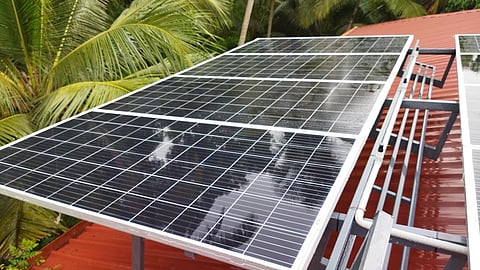
In its analysis, Ember modeled a 3 kW rooftop solar system for a household using 350 units per month. This costs INR 87,000 after the INR 78,000 PM Surya Ghar subsidy and pays back in 3.3 years.
Analysts believe adding a 5 kWh battery system could cut daytime exports by 85% to 90%, shifting about 1,600 to 1,800 units a year to the evening. It will, however, be an expensive proposition, stretching the payback period to nine years.
At the same time, analysts believe that because India’s net metering system lets households use daytime solar exports to offset evening power use, households have no financial incentive to install batteries. Under the arrangement, discoms must compensate households for solar power exported during the day, even though they may have to buy electricity at a much higher price to meet demand in the evening.
Ember analysts recommend offering subsidies, preferably under the PM Surya Ghar Muft Bijli Yojana (PMSGMBY), to cover battery costs. A 50% subsidy, for instance, could bring down the payback period for a solar-plus-battery system to 6.3 years. PM Surya Ghar targets 10 million solar rooftops and 30 GW installed PV capacity (see India Eyeing 30 GW Rooftop Solar Capacity With New Scheme).
“Subsidising hybrid systems for even half of the current scheme’s 10 million target would create 15–25 GWh of distributed storage,” says Ember.
Supporting hybrid systems for 5 million households could create 15–25 GWh of distributed storage capacity, requiring around INR 280 billion in financial support. State governments could also offer additional battery subsidies to reduce upfront costs for households.
Batteries installed now would also prepare households for future reforms, according to analysts. They identify two possible policy scenarios: limiting banked solar exports and restricting their use during peak hours. With a 40% cap on banked solar exports, the estimated payback period for a subsidized hybrid rooftop solar system falls to 6.5 years, and 5.7 years under peak-hour (6:00 p.m. to 10:00 p.m.) restrictions and a 20% surcharge.
Ruchita Shah, Ember Energy Analyst Asia, believes India should integrate battery storage with rooftop solar installations under PM Surya Ghar to manage future grid challenges. Drawing on Australia and the US, she notes that solar power’s value depends not only on how much electricity it generates, but also on when it is used.
Titled Plugging storage into India’s rooftop solar revolution, the Ember analysis is available for free download on its website.
In an earlier report, Ember said solar paired with battery storage could supply most of India’s electricity at competitive costs, supplying about 90% of the country’s electricity at about INR 5.06/kWh (see Ember: Solar, Storage Could Meet 90% Of India’s Power Demand).
