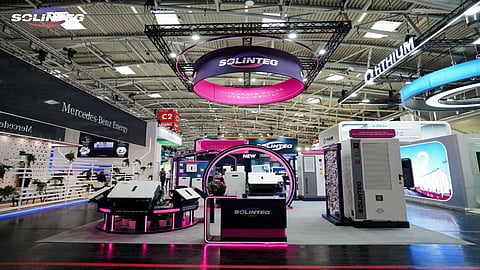

Solinteg showcased its M2HT 75-125K series hybrid inverter at the show
It supports PV generation, storage, grid, and DG energy sources, according to the product datasheet
In terms of operation, the inverter offers self-consumption, emergency backup, dynamic electricity tariff-based charging/discharging, and PV + DG function
Wuxi Solinteg Power Co., Ltd, a China-based PV inverter and energy storage system (ESS) maker, highlighted its latest 3-phase hybrid inverter, M2HT 75–125K, at Intersolar Europe 2026.
This inverter features 6 MPPT channels, each rated at 48 A PV and operating over a voltage range of 160 to 950 V, supporting high-capacity bifacial PV modules and maximizing solar power throughout the day, including during low-sunlight periods. It is designed for up to 200% DC/AC PV oversizing compared to the rated full-load power output. On the AC side, it is rated for up to 125 kW of power output at a full-load current of 189.4 A. Its independent dual battery ports, each with up to 150 A current-carrying capacity, couple with external battery storage to store excess PV generation post captive load feeding and provide emergency clean backup power to end-users. In the event of a grid outage, the inverter switches to off-grid mode within 20 ms and supports emergency backup for a duration that aligns with the connected battery capacity. According to the product datasheet, the inverter is designed to provide up to 165 A overload backup power for up to 10 seconds. This function helps to continue uninterrupted operation of high-inductive loads. For longer backup durations, it can be connected to an external standby diesel generator (DG). This inverter can also deliver full-load power to up to 100% unbalanced phases (e.g. A-phase: 0 W, B-phase: 0 W, C-phase: 100 W), maintaining system stability.
The company says the inverter’s built-in energy management system (EMS) is programmed for all operational functions discussed above and can facilitate data response within milliseconds. It can also schedule battery charging/discharging according to dynamic grid electricity tariffs.

