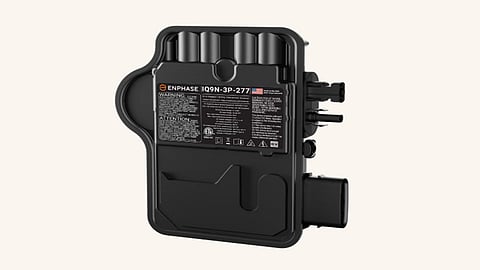

Enphase’s latest PCS works in conjunction with IQ Gateway Commercial 2 or IQ Gateway Commercial Pro with either current transformers or energy meters
This software delivers solar production and energy consumption data to the Enphase remote monitoring and analysis system in real time
It also lets installers set the allowable export limit without transformer upgradation or system resizing
Enphase Energy, Inc., a US-based provider of module-level power electronics (MLPE) and battery systems, has introduced its latest software for controlling the power generation and energy consumption of microinverter-based small commercial PV projects, particularly in California.
According to the company, this new Power Control Software (PCS) offers installation flexibility and cost optimization. Once blended into IQ Gateway Commercial 2 or IQ Gateway Commercial Pro, which serves as an interface between microinverters and a remote monitoring and analysis system, like the Enphase App, the control software delivers solar production and energy consumption data in real time. The company states that these gateways require either current transformers for energy consumption monitoring or only a remote meter (like Enphase’s DTS-310), according to the C&I prosumer’s monitoring setup. Conventional hardware-based power control systems might cause upgrades of the distribution transformer (at the feeding point) capacity, or other costly infrastructure changes at the last moment of commissioning, to comply with regional no-export or limited export (feeding of excess solar generation to the grid) regulations. Enphase’s software-based PCS, however, lets its installers set the limit of the aggregate allowable export limit at any given time without delaying project installations or commissioning dates. Given the regulatory complexities of the California Energy Commission (CEC) for export control in commercial PV projects, such as California Rule 21 non-export interconnections using certified UL 3141 PCS configurations under Options 8 and 10, Enphase is enlisted as a supplier with commercial inverter configurationsf or PCS support. It reduces review cycles for interconnection with the grid and eliminates the need for 3rd party export-control hardware by installers. The company adds that this enlistment helps installers avoid re-permitting, often costly, and Title 24 resubmission for commercial repowering or upgrading projects (matching sanctioned AC capacity) that switch to microinverters.
The above-mentioned advantages are also reflected by Keng Fong, senior vice president of sales at Enphase Energy. He said, “Enphase Power Control software is designed to help installers move faster and stay on budget by replacing custom power-control hardware with utility-recognized control functionality, unlocking commercial projects that would otherwise stall due to interconnection or infrastructure constraints.”

