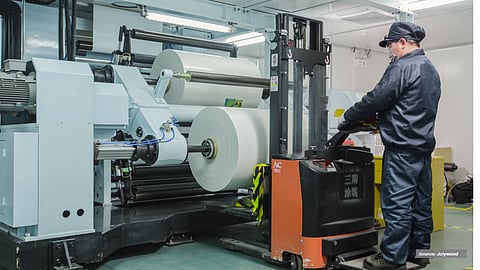


The industry has expanded beyond conventional EVA, with POE and multi-layer EPE films becoming increasingly important for advanced cell technologies
Encapsulation films have evolved from symmetrical monolayer designs to optimized front-and-rear configurations for different module architectures
This year's survey classifies encapsulation materials into 3 categories: EVA, POE, and multi-layer films
Encapsulation films and backsheets are key components of modules, primarily safeguarding their reliability but also contributing to costs and performance. Encapsulation films protect the solar cell matrix by cushioning it against mechanical stress and vibrations, thus preventing damage to the cells and interconnections. These materials also serve as the first layer of electrical insulation for the cell matrix, which is vital since solar cells are connected in series and produce high voltages. Additionally, they form an airtight seal that blocks moisture from entering, preventing corrosion of the metal interconnectors and cell surfaces when exposed to water vapor. Encapsulation is the first line of defense against common module degradation. Maintaining the structural integrity of the module by bonding the cells to the front glass and the rear backsheet or glass, thereby preventing delamination, is also a key function of these polymers (see Encapsulation Materials Become A Key Differentiator In Module Design).
As for the chemistry, ethylene vinyl acetate (EVA) was the uncontested standard for module encapsulation for decades. Its popularity was well-earned: it is inexpensive, easy to process during lamination, and offers high transparency. However, as cell architectures evolved, standard EVA increasingly fell short of meeting the requirements of encapsulation materials. This has led the industry to turn first toward polyolefin elastomers (POE) and then to a coextruded hybrid structure consisting of both POE and EVA in an EVA-POE-EVA (EPE) configuration.
Reflecting this structural evolution in the market, we have adapted our taxonomy of encapsulation materials in this year's survey. In the past, we broadly categorized encapsulation products into just 2 streams: EVA and non-EVA. In this edition, however, we have split products into 3 categories – EVA, POE, and multi-layered films – with the third category primarily representing the rapidly growing EPE segment.
A standard solar module typically utilizes 2 layers of encapsulation sheets – one on the front and one on the rear. Traditionally, these layers consisted of uniform, transparent monolayers applied symmetrically to both sides of the cell matrix. As structural innovations advanced, white encapsulation variants gained popularity on the rear side of monofacial glass-backsheet modules to bounce unabsorbed light back into the cell and boost power output. The fact that advanced cell technologies are now claiming mainstream market share has paved the way for new polymer chemistries and multi-layer structures. These engineered multi-layer films offer an optimized balance of material costs, electrical performance, and factory manufacturability. Simultaneously, symmetrical layouts have given way to varied front-and-rear combinations – a shift driven by the specific chemical and electrical requirements of the new and advanced cell architectures. On the manufacturing front, single-layer PV encapsulation materials are typically produced via resin extrusion, while coextrusion processes are utilized to manufacture multi-layer films (see The Materials Behind Long-Term PV Module Reliability).
The text is an edited excerpt from TaiyangNews Market survey on Encapsulation Materials & Backsheets 2026, which can be downloaded for free here.
