
Key takeaways:
halm presented its new solution to EL-based PV cell inspection at SNEC 2026
The solution can integrate with IV testers and AI-assisted defect evaluation
The latest flash system is specified for a lifetime guarantee of 10 million flashes
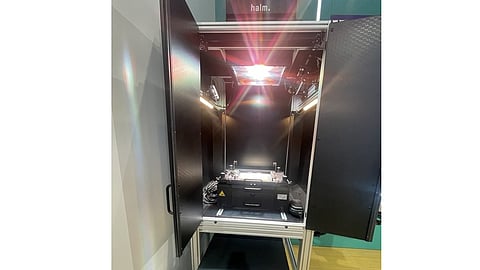
European characterization equipment manufacturer halm introduced its latest solution for cell testing. Marketed as shadowless EL, the company claims that the EL measurement produces an image with no shadows from the contact bars or busbars.
halm also presented a comparison of images from shadowless EL and traditional EL systems to demonstrate how the busbars shadow the defects below metallization at SNEC 2026 in Shanghai. This solution, developed by halm, captures IR images beneath the busbars to identify any defect hidden under the cell metallization. The commercial availability of this tool, however, is currently unknown.
The company claims that the image acquisition time depends on cell quality and can range from 20-35 ms for TOPCon, 10-30 ms for back-contact, less than 10 ms for HJT, and about 50-70 ms for a mono-PERC cell. The tool includes an 8 MP camera and can generate an image of a G12 (210 mm) square wafer at 200 μm per pixel resolution.
Promoted as offering full-cell-area visibility with no hidden defects, the shadowless EL can be integrated with halm’s IV cell tester. This integration avoids the requirement for additional contact probes or a platform and can use the IV measurement station. When combined with halm’s cetisPV-EL-eval 2, the tool can also automatically detect the defect type and sort the cells according to the initial standardization inputs, says the company. For example, the EL2Class concept can use specific quality data points to sort the measured cells into grades A and B, thereby avoiding further product classification schemes. The smart solution can also classify cells into categories based on defect type, such as microcracks, scratches, sawing and diffusion marks, printing misalignments, contamination, and others.
The throughput of this tool system, according to the company, is limited by the flasher and the automation system used to load and unload the cell. halm also highlighted its new flash system with a guaranteed lifetime of 10 million flashes, which further reduces downtime and the need for frequent lamp replacement.

