

TRUE WIND from IED is named a finalist in the Photovoltaics category of The smarter E AWARD 2026
The technology measures the structural response of individual tracker rows rather than relying solely on wind speed data
Real-time vibration analysis enables tracker-specific protection and aims to reduce yield losses caused by unnecessary safety positioning, said the company
Solar trackers are designed to maximize energy generation while operating under varying wind conditions. Wind protection strategies are therefore an important aspect of tracker design and operation. Conventional approaches typically rely on wind speed measurements from anemometers or nearby weather stations. During high wind events, tracker systems are commonly moved into stow positions to reduce structural loads.
Spain-based IED Electronics Solutions is named a finalist in the Photovoltaics category of The smarter E AWARD 2026 for its TRUE WIND technology, developed for horizontal single-axis trackers. Part of the company's Sunner solar tracking portfolio, the technology focuses on monitoring the structural response of tracker rows under actual wind conditions.
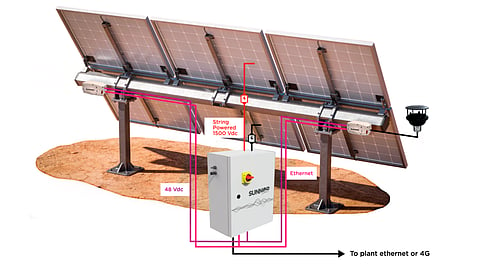
The system uses a Galloping Avoidance Unit (GAU) mounted on the tracker beam to measure torsional vibrations and evaluate parameters such as natural frequency and damping. According to the company, analysis of these characteristics enables the detection of aeroelastic instabilities, including galloping.
IED Electronics Solutions states that TRUE WIND applies filtering and modal analysis techniques to estimate the impulse response of individual vibration modes under real wind conditions. Rather than relying solely on wind speed measurements, the technology evaluates the behavior of the tracker structure itself.
The system allows individual tracker rows to respond when instability is detected, instead of applying protective measures across an entire plant. According to IED Electronics Solutions, this can reduce unnecessary stow events and associated energy production losses.
TRUE WIND is designed for both new and existing solar plants, it adds. The company states that correlating operational data with structural design parameters can support improved plant operation and maintenance planning.
