

LG Energy Solution’s new JF3 LINK uses US-manufactured LFP batteries and offers around 26% higher site-level energy density
The company combines sodium-ion batteries with solid-state transformers to address fluctuating power demand in AI data centers
Its North American energy storage production capacity is expected to exceed 50 GWh by the end of 2026
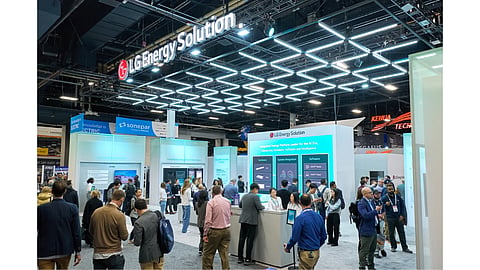
Increasing the amount of energy that can be stored within a given installation area is one of the key developments South Korean battery manufacturer LG Energy Solution is highlighting at RE+ 2026. Its next-generation battery energy storage system (BESS), JF3 LINK, uses US-manufactured lithium iron phosphate (LFP) batteries and, according to the company, offers about 26% higher site-level energy density than conventional systems.
In addition to improving energy density, LG Energy Solution has incorporated thermal barriers to limit the spread of thermal runaway. The company says the system meets the requirements of the National Fire Protection Association (NFPA) 69 and NFPA 855. Its cooling system uses digital twin technology to adjust pump speed and coolant temperature based on operating conditions, electricity prices, and battery aging.
For artificial intelligence data centers (AIDCs), LG Energy Solution offers a power infrastructure concept that combines its sodium-ion battery system, SIB LINK, with solid-state transformers (SSTs). Unlike conventional transformers, SSTs use semiconductor-based power electronics to control power conversion, allowing them to respond quickly to changes in electricity demand while helping reduce conversion losses.
Sodium-ion batteries offer advantages in terms of high-power performance, thermal stability, and low-temperature operation. Their integration with SSTs helps address sudden fluctuations in power demand associated with AI data center operations, the company adds.
Other products on display include the next-generation JP6 uninterruptible power supply (UPS) battery system and a battery backup unit (BBU) based on 2170 cylindrical cells.
On the software side, LG Energy Solution Vertech, the company’s US energy storage division, is showcasing AEROS Intelligence. The platform uses battery operating data to improve system performance and reduce downtime. The company says the software could also delay battery augmentation – the addition of battery capacity to compensate for degradation – by around 1.5 years.
LG Energy Solution aims to secure more than 50 GWh of ESS production capacity in North America by the end of 2026 and increase it to around 70 GWh by the end of 2027. The company is also expanding its battery portfolio beyond pouch-type LFP cells to include prismatic LFP cells and sodium-ion batteries.