
Key takeaways:
Nines PV uses fluorine gas to dry-etch the silicon under atmospheric pressure in TOPCon production as an alternative to wet chemical etching
The company’s current commercialization focus is single-side poly-Si wraparound removal
It is also evaluating the technology for additional etching processes and future silicon and tandem cell architectures
The surface preparation of a silicon wafer essentially involves etching, be it surface cleaning, texturing, edge isolation, BSG, or PSG removal. In mainstream cell lines, these processes are carried out using wet benches, which consume chemicals and large amounts of water. Equipment makers offer dry etching processes as an alternative to wet benches. One such company is Nines PV, based in Ireland.
The company’s dry etching solution is specifically designed for TOPCon cell processing. The mainstream TOPCon process requires 3 main wet-chemical etching steps, which Laurent Clochard, the company’s CTO, says can be replaced with this approach.
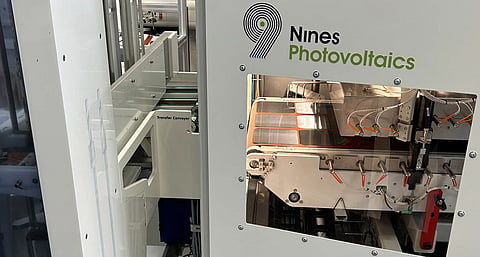
Unlike some dry etching processes that require vacuum and plasma, Nines PV uses fluorine-based gas-phase etching carried out at atmospheric pressure. This atmospheric dry etching (ADE) solution is promoted with an emphasis on etching of the poly-Si wraparound in the TOPCon process. The company’s ADE SS Poly-ETCH, used for single-side etching of the wraparound, can process up to 24,000 wafers per hour (up to G12 size).
Nines PV’s ADE can also be used for surface damage etching (SDE) and wafer texturing, which are preliminary steps before diffusion and deposition. The company also promoted its solution for these processes as part of its participation in the TaiyangNews Market Surveys on Solar Cell Production Equipment. However, the company’s current commercialization focus is scaling the technology for poly-Si wraparound etching in the TOPCon process. Clochard stated that the technology is at an advanced stage and that the company is conducting cost-benefit assessments with cell manufacturers globally, especially in India.
Additionally, the company is conducting R&D on other cell architectures, such as back-contact (BC), tandem, and future-generation TOPCon structures.

