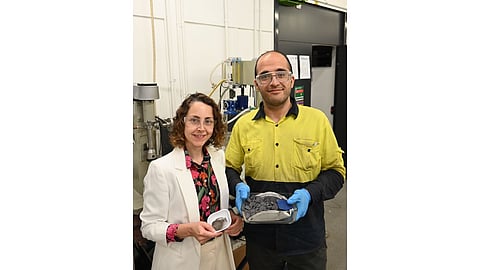


The new extraction method developed by the University of Newcastle uses mechanical crushing followed by flotation to separate silver without acids or harsh chemicals
Researchers claim the process is fast, safe, and recovers more than 97% of silver from discarded solar panels
They believe the approach could support large-scale solar recycling in Australia, which is expected to generate over 1 million tons of panel waste by 2050
Researchers at Australia’s University of Newcastle have developed an acid-free extraction method to recover high-grade silver from end-of-life solar panels. They claim this method recovers over 97% of the silver in ‘just a few minutes.’
In contrast to the recovery methods used currently, which are time-consuming and rely heavily on chemical-intensive processes, the Australian researchers claim their physical separation technique is a fast, safe, and highly-effective alternative.
The new method uses a comminution technique wherein panels are mechanically crushed and ground into fine particles, followed by flotation. The latter is a separation technique that uses water, air bubbles, and a small amount of standard floatation reagents to float valuable metals to the surface, whereas waste materials sink.
“By using flotation – a fast and well-established minerals beneficiation technique – we can recover almost all of the silver in an end-of-life solar panel in just a few minutes, without using any acid,” claims the Associate Professor at the University of Newcastle’s Centre for Critical Minerals and Urban Mining (CRITIUM), Mahshid Firouzi, who led the research.
Firouzi added that this is the first demonstration of froth flotation for the recovery of metallic silver from recycled, ground solar panels, which, she stressed, “many in the field believed was not feasible.” Circular Solar Solutions supplied the panels for the research work that tested and refined the mineral-recovery technique for over 18 months.
Australia expects more than 1 million tons of waste solar panels by 2050, containing an estimated 300 to 500 tons of silver.
“Silver was our first test case, but there are likely significant opportunities to apply comminution, flotation science and hydrodynamic techniques to unlock billions of dollars’ worth of other metals and minerals currently trapped in urban and mining waste,” stressed Firouzi. “We cannot afford to let these valuable resources go to waste.”
The team’s next step is to explore the recovery of silicon from end-of-life panels; silicon makes up 90% of the weight of a crystalline solar cell.
According to the team, the goal is to eventually commercialize sustainable recycling solutions that recover valuable metals and minerals from old solar panels and other materials to contribute to a circular economy.
According to the Smart Energy Council, around 1/3rd of the end-of-life panels could be reused, contributing up to 24 GW of energy by 2040. Australia is also mulling a plan to manage solar panels from start to end of life under a national product stewardship scheme (see Australia’s Solar Panel Waste Could Unlock 24 GW By 2040).
The October 9, 2025, TaiyangNews Solar & Sustainability 2025 Conference had industry experts discussing recycling and circular economy under the broader umbrella of sustainability (see Advancing Solar Sustainability Through Finance, Traceability, and ESG).
