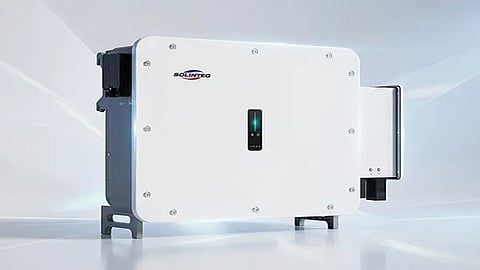

Solinteg has secured ‘full’ compliance with Australia’s latest smart inverter framework, CSIP
This certification confirms that its inverters can reliably respond to grid instructions, enable dynamic export management, and comply with Emergency Backstop requirements
Unlike an external add-on feature, this ‘full certification’ indicates that the communication and control functions are embedded within the inverter design
Solinteg, a provider of solar and storage solutions, has received full certification under CSIP-AUS v1.2 (TS5573:2025) standard for its hybrid inverter portfolio. Without naming the third-party certification agency, the company says this latest Australian Common Smart Inverter Profile (CSIP) standard confirms that its hybrid inverters meet Australia’s updated technical requirements for secure communication, interoperability, and grid support functionalities.
CSIP-AUS v1.2 establishes a national framework for the operation of smart inverters in distributed energy systems (DERs), enabling them to respond to network control signals reliably, support dynamic export control (feeding of excess solar energy into the grid after self-consumption), and comply with Emergency Backstop mechanisms. The last one is a grid safety function that allows network operators to intervene and control DERs remotely, during emergency or abnormal grid conditions, even if normal communication channels fail. According to the company, these capabilities are increasingly critical as rooftop solar plus storage penetration grows and the electricity grid transitions toward a more distributed, digitally coordinated operating model. The standard also focuses on communication protocols, cybersecurity principles, and interoperability between DERs and network operators.
From a system integration perspective, the company states this ‘full certification’ indicates that communication and control functions are embedded within the inverter design, rather than merely as an external add-on. It adds that this approach enables more reliable interoperability with Australia’s utility platforms and reduces system complexity for installers, network operators, and asset owners.
Bob Cai, Head of Solinteg Australia, states that interoperability and secure communication are becoming central design parameters for next-generation inverter systems, as Australia’s grid networks become increasingly dynamic and interconnected.

