
Key takeaways:
suena energy's hybrid battery operation project was named a finalist for The smarter E AWARD 2026
The 4 MW / 4.6 MWh battery switches seasonally between behind-the-meter operation and electricity market participation
Software-based accounting separation enables the same battery to serve 2 different functions without additional hardware
Battery energy storage systems (BESS) are increasingly deployed alongside solar installations and as standalone systems. Depending on the application, they can reduce electricity costs by supplying stored energy or by participating in electricity markets to sell excess energy.
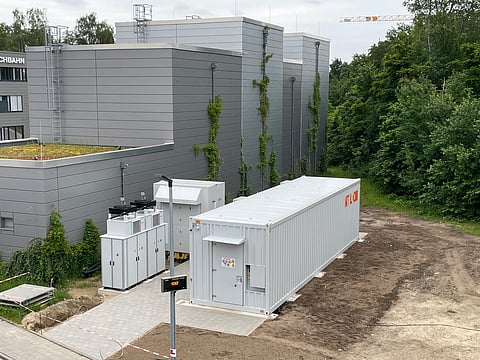
A stand-alone battery storage project at Hamburg’s Alsterdorf electric bus depot, which demonstrates this concept, has been named a finalist for The smarter E AWARD 2026 in the Outstanding Projects category. Developed by suena energy in collaboration with Hamburger Hochbahn AG, the project shows how the 4 MW / 4.6 MWh battery system can switch between 2 functions: supplying power during periods of high demand, and participating in electricity markets.
From September to February, the battery operates behind the meter. This means that the battery functions as part of the bus depot’s own electrical system. At times of high electricity demand, it supplies stored energy to the depot, which is commonly known as peak shaving. This reduces electricity costs by drawing less from the grid during high demand.
From March to August, the battery operates in front-of-the-meter mode. In this mode, the storage system trades the available battery capacity in the day-ahead and intraday electricity markets using suena energy’s AI-based Energy Trading Autopilot. During this period, the battery behaves as an independent market asset, charging and discharging according to electricity prices and grid requirements.
This is possible due to the temporary accounting decoupling, which enables the storage system to operate as an independent market asset. Although the battery remains physically installed at the bus depot, its commercial operation can be temporarily separated from the depot’s electricity account. According to the project partners, this is the first practical demonstration of such a concept for BESS systems.
The project demonstrates how a single battery can serve multiple purposes by adapting to seasonal operating requirements – reducing electricity costs and generating revenue.

