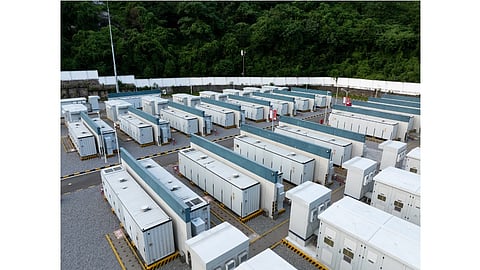


Mexico has launched a strategic tender process for renewable power and energy storage projects aligned with national electricity planning
The framework prioritizes faster permitting, interconnection studies, and project evaluation through a centralized digital platform
The government has identified at least 935 MW of standalone storage demand across multiple regional grid zones before 2030
Mexico’s Secretariat of Energy (SENER) has launched a new call for strategic electricity generation and energy storage projects. These are aimed at strengthening the country’s power system reliability, sustainability, and energy security.
The tender framework allows private companies and joint ventures with the Federal Electricity Commission (CFE) to participate in renewable energy generation and standalone energy storage projects aligned with Mexico’s binding electricity planning.
Mexico has identified a reference requirement of 935 MW of standalone energy storage capacity across 7 regional control areas, with most projects expected to provide 3 hours of storage duration. The largest needs were identified in the Northern, Eastern, and Northwestern regions, as well as in Baja California and the Peninsular region.
The program applies to renewable generation plants as well as non-associated battery energy storage systems (BESS) with capacities of 0.7 MW or more. It is not open to distributed generation or for self-consumption.
The National Energy Commission (CNE), the National Energy Control Center (CENACE), and the CFE will coordinate the evaluation and approval process.
Authorities said the initiative is designed to accelerate permitting, interconnection studies, and project approvals through a priority process managed via a digital single-window platform.
Selected projects will need to close financing within 8 months from the date of securing a permit and secure environmental and social impact assessment authorizations within 6 months. Projects already submitted to, or being reviewed by, CENACE or CNE may still qualify under the Strategic Projects Call for Proposals if the bidders update their projects to align with the official electricity generation and storage plans.
Under the framework, projects will be evaluated based on technical viability, contribution to grid reliability, operational flexibility, environmental benefits, and alignment with national planning objectives.
According to the announcement in the Official Gazette of the Federation, the process aims to support projects expected to enter commercial operation before 2030.
SENER published the call on May 15, 2026. Expressions of interest and requests for interconnection studies can be submitted between May 25 and August 25, 2026.
Mexico sees this tender call as contributing to the goal of increasing electricity generation from renewable sources from 24% to 38% by 2030. This goal requires an investment of almost MXN 740 billion and an additional 32 GW of electricity generation capacity, according to Mexico’s Secretary of Energy, Luz Elena González Escobar.
At the 27th Conference of the Parties (COP27) to the UNFCCC, Mexico committed to expanding its current renewable energy capacity with over 30 GW combined wind, solar, geothermal, and hydroelectric assets, reaching over 40 GW of combined wind and solar energy by 2030 (see Mexico Targets Over 40 GW Wind & Solar Capacity By 2030).
