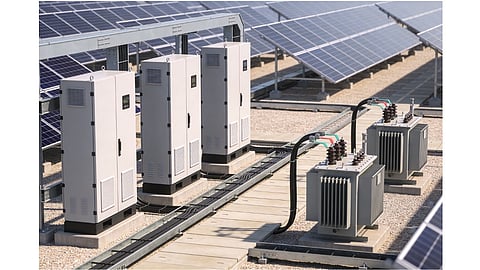


More than 28 GW DC of PV inverter demand and around 12% of planned energy storage deployments for 2026-2030 could be affected by the proposed EU restrictions on imported inverters and PCS
Central and Eastern European countries are expected to see the biggest impact because of their reliance on Chinese suppliers and EU-funded projects
Wood Mackenzie says the final impact will depend on whether EU member states extend the restrictions to nationally funded projects and on upcoming cybersecurity rules
A decision by the European Commission to ban solar inverters from high-risk countries, primarily China, could affect more than 28 GW DC of PV inverter demand through 2030, according to Wood Mackenzie.
Analysts estimate the restrictions would impact around 14% of the EU's solar demand and 12% of energy storage deployments planned for 2026-2030, primarily utility-scale storage.
The analysis follows the commission’s plans to restrict Chinese-made inverters in publicly funded energy projects with a view to supporting the domestic manufacturing industry and assessing cybersecurity risks to the EU’s power system (see Solar Trade In Focus As China & EU Weigh New Curbs).
Wood Mackenzie believes that in 2025, Chinese suppliers accounted for over 80% of inverter shipments to Europe in 2025.
Central and Eastern European (CEE) countries are expected to face the greatest disruption because of their reliance on Chinese inverter suppliers and EU funding. Most impacted will likely be Romania, Bulgaria, Czechia, the Baltic states, and Greece.
Reuters has separately reported that 36 companies and investors from CEE nations have written to European Commission President Ursula von der Leyen warning that a ban on EU funding for Chinese-made inverters could slow or halt the rollout of solar and wind projects in poorer European nations. These nations are heavily dependent on public money as well as Chinese supply chains.
Additionally, the commission is reportedly asking EU member states to adopt the restriction for any solar and energy storage projects funded from national budgets. “If Member States comply, the share of capacity affected would expand significantly beyond the current estimates,” cautions Wood Mackenzie.
EU-backed utility-scale projects in North Africa, the Middle East, and the Caspian region will also be adversely impacted by this ban, point out Wood Mackenzie analysts.
The scope of restrictions may further expand, according to the analysts, if proposed changes to the EU Cybersecurity Act expand the ban to cover all solar PV inverters and PCS, regardless of funding source.
“This ban represents a meaningful shift, around 4 to 5 GW per year of demand moving away from Chinese vendors through 2030,” said Juan Monge, principal analyst at Wood Mackenzie. “But it is important to keep that in context: roughly 80% of European solar and storage demand flows through private and nationally funded channels, where Chinese inverter dominance will remain intact for now.”
While such a ban will likely increase total project costs by 2% to 8%, depending on market segment, cost is not the only disruptive factor. Wood Mackenzie Research Analyst Joe Shangraw explains, “Procurement complications, design changes and the forced unbundling of integrated battery-inverter systems present additional challenges, particularly in price-sensitive Eastern European markets.”
Monge says the focus now is on whether the revised EU Cybersecurity Act will classify solar inverters as critical infrastructure and whether member states will adopt similar restrictions on national funding, which could considerably change the ‘scale of disruption’.
Following the EU’s move to restrict Chinese-made inverters in publicly funded energy projects, the US is reportedly mulling a ban on imports of Chinese solar inverters. A draft rule is expected as early as this year (see US Reportedly Eyeing Ban On Chinese Solar Inverter Imports).
