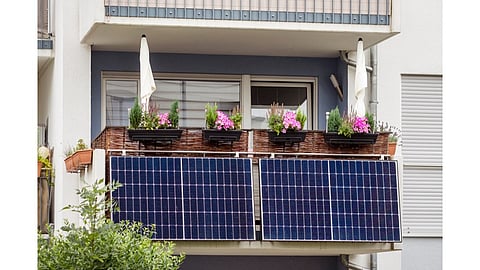


The UK government is accelerating the rollout of plug-in solar systems, planning to ensure their supply in shops within months
It is working with retailers such as Lidl and Amazon and manufacturers, including EcoFlow, to bring the systems to market
It is also coordinating with the Energy Networks Association and regulator Ofgem to update rules allowing <800 W plug-in panels to connect directly to domestic sockets
The UK government is moving full speed ahead with its promise to bring in plug-in solar, also known as balcony solar, as part of its accelerated energy package in the wake of escalating tensions in the Middle East. The Department for Energy Security and Net Zero has said it will ensure plug-in solar panels are available in shops ‘within months’.
Earlier this month, Energy Secretary Ed Miliband said the plug-in solar systems will be available in the UK supermarkets to enable households to save on their energy bills, expanding access to solar energy for renters and apartment owners (see UK Turns To Plug-In Solar Amid Middle East Crisis).
Now the government says it is ‘driving forward’ with the rollout of these systems, working with retailers like Lidl and Amazon alongside manufacturers such as EcoFlow to bring them to market.
The move aims to cut down the country’s reliance on global fossil-fuel markets.
“The Iran War has once again shown our drive for clean power is essential for our energy security so we can escape the grip of fossil fuel markets we don’t control,” said Miliband. “Whether through solar panels fitted as standard on new homes or making it possible for people to purchase plug-in solar in shops, we are determined to roll out clean power so we can give our country energy sovereignty.”
The department said it will work with the Energy Networks Association, DNOs, and Ofgem to update the G98 distribution code and wiring regulations BS 7671 to allow UK households to connect <800 W plug-in solar panels to domestic mains sockets, without the need for an electrician, and with tailored safety standards.
Additionally, the government also announced the implementation of the Future Homes Standard under which new homes will need to install solar panels and low-carbon heating. It was to be published this autumn (see New England Homes To Have Solar Panels ‘By Default’).
The ‘common-sense measures’ under the Future Homes Standard could save families up to £830 annually on their energy bills, according to the government.
Octopus Energy Founder and CEO Greg Jackson welcomed the initiatives, saying that since the beginning of the conflict in the Middle East, interest in solar has shot up 50%.
Moreover, the administration has directed energy companies to offer customers discounted energy bills on windy days rather than turning off wind turbines, as has been the practice so far. This move is being introduced in Scotland and the East of England to begin with, under an ‘innovative trial’ to be in place between April 1, 2026, and June 30, 2026.
