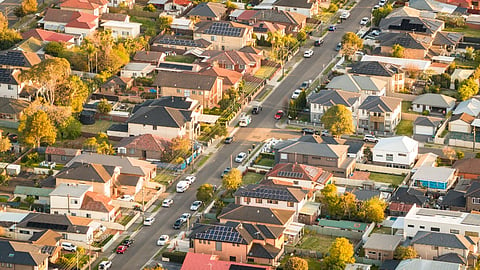


The Victorian government is easing eligibility requirements to expand access to rooftop solar through its Solar for Apartments program
Separately, it has launched a grant program to support demonstrations of technologies aimed at improving energy efficiency for farms
A total of AUD 5 million is available for renewable energy, storage, electrification, and energy efficiency under the OFEED program
The Australian state of Victoria is expanding its Solar for Apartments program to make rooftop solar accessible to more residents, even as the federal government explores balcony solar and plug-in batteries to expand access to clean energy.
Launched in 2024 in collaboration with the federal government to reduce upfront costs, Victoria’s Solar for Apartments program has helped complete over 150 rooftop solar installations. Almost 50% of this is installed on rental properties.
According to the state government, more than 2,800 residents are already benefiting from the scheme while another 726 residents are expected to benefit from 17 installations under way (see Australian State’s Solar For Apartments Program Takes Off).
The expanded Solar for Apartments program will remove the median property value limit and increase the maximum eligible building size from 50 to 150 lots. The administration says it will allow more apartment buildings, units, and townhouses to qualify for support.
Eligible applicants can receive rebates of up to AUD 2,800 per apartment, subject to a maximum of AUD 140,000 per building. According to the Victorian Government, the rebates cover an average of 76% of installation costs. The program aims to help apartment residents save up to AUD 500 annually on electricity bills.
Owners corporations can also allocate up to 20% of the electricity generated by rooftop solar systems to common property, potentially reducing the cost of powering shared areas, it adds.
Applications for the Solar for Apartments program will be accepted until June 2027.
“Where you live should not determine whether you can benefit from solar. Through our partnership with Victoria, we're helping more apartment residents access rooftop solar today while working together on reforms to safely unlock balcony solar and plug-in batteries for the future,” stated Australia’s Federal Assistant Minister for Climate Change and Energy Josh Wilson.
Separately, Victoria is offering AUD 5 million through its On-Farm Energy and Electrification Demonstration (OFEED) program to support projects demonstrating energy technologies in agricultural settings.
The demonstrations will cover four main areas:
Improving on-farm energy efficiency
Reducing fuel, gas, and overall energy consumption
Generating renewable energy
Installing energy storage systems
Eligible projects that can test and demonstrate technologies under real farming conditions can receive grants of AUD 200,000 to AUD 750,000.
The program will support technologies that are proven but not widely adopted, as well as emerging solutions. Projects should be able to demonstrate practical applications that can be adopted by other farms, industries and regions. Participants must also share their findings to encourage wider adoption.
“From using less diesel to generating and storing renewable energy, these trials will show farmers what works and what they could save,” explained Minister for Agriculture Michaela Settle.
Eligible applicants include agricultural industry associations, farming systems and Landcare groups, Traditional Owner and First Nations organizations, research and development corporations, Catchment Management Authorities, and companies offering suitable energy solutions. Companies with a ready solution will need to partner with an eligible organization.
Applications for this funding round opened on October 16, 2026 and will close on December 11, 2026. Details of the program are available on the Department of Energy, Environment and Climate Action’s website.
Funding decisions will be made after the 2026 Victorian state election scheduled for November 28.
Victoria targets unlocking 25 GW of new renewable energy and energy storage capacity by 2035, including 7.6 GW of additional rooftop solar capacity, aiming for up to a 95% renewables share in its power mix (see Australia’s Victoria Targets 25 GW Clean Energy Capacity By 2035).
