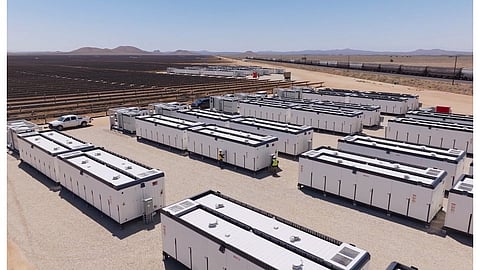


The project will combine 86 MW of solar with 380 MWh of battery storage across lithium-ion and zinc-based systems
Eos says the 10 MW/100 MWh zinc system is designed to store energy for 10 hours
The development on reclaimed coal mine site is expected to cost up to $350 million in capital investment
A zinc-based long-duration energy storage system (ESS) is at the center of a new Google, MN8 Energy, and Eos Energy Enterprises’ solar-and-storage project in West Virginia, US, to supply electricity to the PJM grid.
The project, located in Kanawha County, will include 86 MW of utility-scale solar, 70 MW/280 MWh of lithium-ion storage, and 10 MW/100 MWh of Eos’ Z3 zinc-based long-duration ESS.
While the lithium-ion project will provide shorter-duration storage to help shift power to periods as required, the zinc system is designed to provide 10 hours of energy storage. It is intended to extend the availability of solar power beyond the shorter-duration lithium-ion system and provide grid capacity over more hours of the day.
“The multi-technology solution fills a critical grid need by delivering clean capacity matched to data center load profiles,” stated the project partners.
Eos, as the supplier of Z3 zinc ESS, said this American-made technology with aqueous zinc chemistry is designed to solve real grid reliability challenges. It recently announced plans to consolidate its battery manufacturing operations at the Thorn Hill facility in Pennsylvania (see Global Battery Storage News Snippets).
MN8 Energy President and CEO Jon Yoder added, “Because Google was willing to pair next-generation storage with utility-scale solar, we could engineer proven and emerging technologies into one dispatchable resource – and deliver clean, around-the-clock power where the grid needs it most.” MN8 will own and operate the project.
Google said the project will support local digital infrastructure, including a planned Google facility in West Virginia. Under the agreement, the tech giant will purchase the project's energy, capacity, and clean energy attributes. The development is expected to be the first commercial-scale long-duration energy storage deployment in West Virginia.
It will also be Google's first project using Eos' American-made Z3 technology and the first project under the previously announced supply agreement between MN8 and Eos.
The solar portion is expected to begin commercial operations in 2028, followed by the lithium-ion storage system in 2029 and the long-duration storage system in 2030.
The project, known as Mammoth Solar, is being developed on a reclaimed coal mine. MN8 estimates that it could represent up to $350 million in capital investment and generate about $4 million in property tax revenue for the county and local schools during its first 20 years of operation. Construction is expected to create about 200 jobs, with additional full- and part-time positions supporting the project during its operating life.
