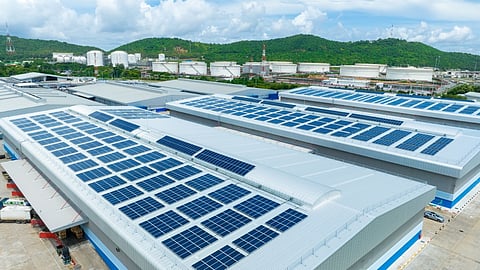


According to a MoP proposal, battery storage could be required for rooftop solar systems above 10 kW
The proposed requirement is at least 20% of the system's daily energy generation, unless a different proportion is specified
The storage provision is expected to take effect from April 1, 2028, under the draft
India's Ministry of Power (MoP) has proposed requiring battery energy storage systems (BESS) for rooftop solar installations above 10 kW, with effect from April 1, 2028.
The proposal is part of the draft Electricity (Rights of Consumers) Amendment Rules, 2026. It proposes that the storage provision will take effect where State Electricity Regulatory Commissions (SERCs) have not specified a different capacity threshold.
The proposal gives state regulators flexibility to determine the threshold and storage requirements based on local conditions.
As per the draft, SERC may prescribe the capacity threshold above which prosumers must install energy storage. The required storage capacity would be at least 20% of the renewable energy system's total daily generation, unless the respective Commission specifies a different proportion.
In the absence of a threshold set by a State Commission, the proposed requirement would apply to renewable energy systems with an installed capacity exceeding 10 kW.
The ministry said falling battery storage costs, supported by economies of scale, technological innovation and market competition, have improved the economic viability of storage deployment.
Integrating batteries with rooftop solar could also help shift surplus electricity to evening hours, support grid stability and ease operational pressure on distribution companies.
Additionally, the draft also proposes allowing consumers, including commercial and industrial (C&I) units and MSMEs, to install rooftop solar capacity beyond their sanctioned load. This will be subject to limits set by State Commissions based on local grid capacity and technical requirements.
However, consumers would be allowed to feed electricity into the grid only up to their sanctioned load, unless the distribution company approves a higher limit. Power injected beyond the approved limit would not qualify for compensation and could attract penalties.
The draft also proposes delaying the rollout of Time-of-Day (ToD) tariffs to align it with smart meter installation. Under the proposal, ToD tariffs would apply to consumers with a load of 10 kW and above from April 1, 2028, and to other non-agricultural consumers from April 1, 2029.
This will give state regulators the flexibility to decide solar and peak hours based on electricity demand and generation patterns in their respective states, instead of following fixed timings.
Earlier, the Central Electricity Authority (CEA) proposed making co-located energy storage mandatory for new ground-mounted solar and onshore wind projects commissioned after July 1, 2027 (see India May Mandate Storage For Solar, Wind Projects From 2027).