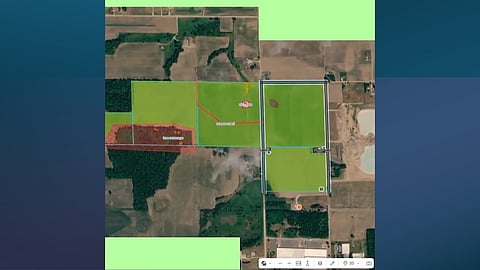


PVcase has launched PVcase Concept, a cloud-based tool for early-stage solar site feasibility and preliminary design
The platform supports buildable-area analysis, preliminary layouts, and comparisons based on capacity, CapEx, LCOE, and yield indicators
It also supports battery storage feasibility assessments, says PVcase
Solar software provider PVcase has expanded its product portfolio with a cloud-based tool for early-stage project development, PVcase Concept.
Launched on November 16, 2026, on the opening day of RE+ 2026 in Las Vegas, US, the tool, said PVcase, is designed to bridge the gap between initial site selection and detailed engineering. It helps developers determine whether a potential site is suitable for solar development.
It enables developers to evaluate site suitability and create preliminary layouts before moving to detailed engineering.
The software allows users to import site boundaries through KML or KMZ files or draw them directly. Developers can analyze geographic information system (GIS) layers, apply site constraints, and setbacks. They can also identify the area available for project development.
PVcase Concept also enables users to generate preliminary solar layouts and adjust tracker blocks, corridors, pitch, and azimuth. Developers can compare different layout options based on capacity, capital expenditure (CapEx), levelized cost of electricity (LCOE), and energy yield indicators.
Additionally, the platform also supports battery energy storage system (BESS) feasibility assessments. Users can generate automated storage layouts based on target capacity, equipment configurations, and site constraints.
According to PVcase, once a site is considered suitable, users can transfer its data and preliminary layouts to PVcase Ground Mount for detailed engineering. This lets developers continue the design process without rebuilding the project from scratch.
“Solar developers do not lack data. They lose control of it. Site data, GIS constraints, early layouts and spreadsheets sit in separate tools, so the go/no-go decision is made on the most scattered evidence in the whole workflow, and work is rebuilt when a project reaches detailed design,” explains PVcase.
Citing the findings of its State of Solar Project Development 2026–27 survey, 46% of industry professionals said at least half of their projects never reach construction stage.
“Every site in a pipeline starts as a 'maybe', and too many stay that way too long, pulling engineering time into projects that won't get built,” said David Trainavicius, CEO and co-founder of PVcase.
He added, “PVcase Concept closes the gap between finding a site and engineering it, with a single source of truth for the go/no-go decision.”
PVcase Concept is available worldwide now. In the US, it is available with the full PVcase Prospect data layer.