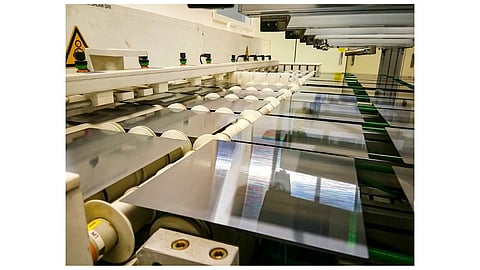


RCT Solutions examined the impact of different wafer sizes on TOPCon cell manufacturing, module design, and costs
The analysis finds that the cost differences between wafer formats are relatively small, with module design and equipment compatibility playing important roles
The company recommends wafer standardization, particularly in emerging markets, to reduce conversion costs and productivity losses
German PV manufacturing solutions provider RCT Solutions has highlighted the importance of wafer size standardization as the solar industry shifts towards n-type cell technologies. In its analysis titled Emerging Wafer Sizes in PV Manufacturing, the company examines how different wafer formats affect manufacturing processes, module design and overall costs, with a particular focus on tunnel oxide passivated contact (TOPCon) technology.
Drawing on market developments from 2023 and early 2024, the study examines how leading module manufacturers, including JinkoSolar, JA, Trinasolar, LONGi, and Tongwei Solar, adopt different wafer formats. According to RCT Solutions, M10 wafers accounted for an estimated 63% of the market in 2023, followed by G12 wafers at 20%, while rectangular formats represented around 9%. More recent data show a shift towards rectangular wafer formats. According to the China Photovoltaic Industry Association (CPIA), rectangular wafers accounted for 48.2% of the market in 2025, while conventional 182 mm square wafers represented 11.2% (see TOPCon Wafer Formats Shift Toward Larger And Rectangular Designs).
However, larger wafers also bring manufacturing challenges. According to the analysis, the squaring utilization rate was 66.4% for M10 wafers, compared with 62.4% for G12 and 63.4% for G12R. This indicates that more material is removed during squaring for the G12 and G12R formats than for M10. Although larger ingots can improve production output, unused material needs to be recycled, which adds to energy consumption and costs. Different wafer sizes may also require adjustments to cell production equipment.
The importance of equipment compatibility is also highlighted in the TaiyangNews Market Survey on Cell Production Equipment 2026. The report notes that equipment manufacturers are adapting their tools to larger wafer formats while focusing on higher throughput and lower operating costs. It also covers developments in cell-cutting and edge passivation technologies, which are becoming increasingly important for TOPCon modules using third-cut and quarter-cut cells.
Module design is another important factor when choosing wafer sizes. Module dimensions affect weight, transportation, installation, and power output. The availability of suitable wafers, glass, and production equipment also plays a role in selecting the right wafer format.
RCT’s analysis also compares balance-of-system (BOS) costs for different wafer and module configurations. The results show cost changes ranging from a 2.4% reduction to a 1.5% increase. G12 wafers showed a 2.4% cost reduction in one configuration, while G12R wafers showed changes ranging from a 1.2% reduction to a 0.9% increase. This indicates that the cost advantage depends on both wafer size and module design.
RCT Solutions found that the overall cost differences between major wafer sizes are small. It therefore recommends choosing wafer sizes that are widely used and available from different suppliers, rather than simply choosing larger wafers. Standardization is particularly important in emerging PV manufacturing markets, where frequent changes between wafer formats can increase equipment costs and reduce productivity.
