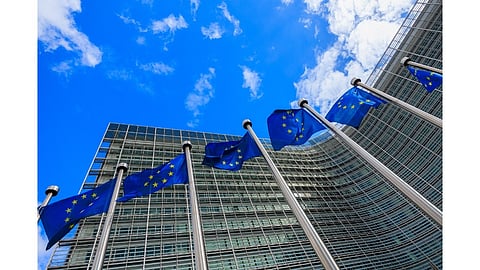


The European Commission has launched consultations to gather evidence and stakeholder feedback on how renewable energy should be promoted in the EU after 2030
The bloc currently targets a 42.5% to 45% renewable energy share by 2030, while its updated climate law sets a goal to cut greenhouse gas emissions by 90% by 2040 and reach climate neutrality by 2050
Renewables made up 25.2% of the EU’s energy mix in 2024, but the EU requires faster growth to meet the objectives
The consultation process includes a call for evidence open until April 16, 2026, and a public consultation until June 12, 2026
The European Commission has launched consultations to help shape the European Union’s (EU) renewable energy framework for the period after 2030. Through this initiative, it seeks stakeholder input to support climate targets, strengthen energy security, and ensure affordable, homegrown clean energy across the bloc.
“The aim of this consultation is to collect evidence, information, data and feedback on how RES could be promoted in the period post-2030 with a view to determine what additional EU action is needed to achieve the 2040 objectives and beyond,” stated the Commission.
By 2030, the bloc targets a share of 42.5% to 45% for renewables by 2030 under the revised Renewable Energy Directive (RED) (see EU Adopts New Renewable Energy Directive).
Recently, the EU Council formally adopted the amended European Climate Law, under which the bloc targets a 90% reduction in GHG emissions by 2040 compared to 1990 levels. By 2050, it aims for climate neutrality across all sectors of the economy.
By 2024, renewables accounted for 25.2% of the EU energy mix, having grown by more than 3% annually within 13 years. However, to achieve its long-term targets, this growth rate for renewables will not be sufficient.
Despite being the most competitive sources of electricity, the integration of renewable energy into the EU’s power mix faces challenges, including grid constraints, low electricity prices affecting investments, slow permitting, local opposition to projects, and limited adoption of renewables in heating, cooling, transport, and hard-to-decarbonize sectors.
The initiative, the Commission explains, is expected to boost investment in renewable energy and storage, improve cross-border energy flows, and strengthen energy security. It will also lower system costs, reduce emissions, support job creation, and help keep energy more affordable for consumers, it adds.
Achieving the climate targets will require accelerated deployment of renewable energy along with effective integration of the power generated into the grid. A policy for the post-2030 period will keep Europe on track to meet its climate goals and provide a clear vision to the investors and stakeholders.
While the 4-week call for evidence is open till April 16, 2026, the 12-week public consultation is open for feedback till June 12, 2026. Inputs received will help the commission prepare a dedicated impact statement, which eventually will be used for the legislative proposal due by the end of this year. Details of the consultations are available on the commission’s website.
