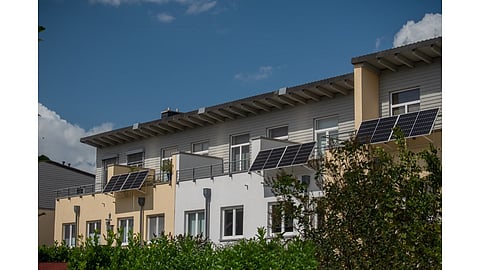


Interest in plug-in or balcony solar has increased in the US over the past year, with multiple states introducing or announcing legislation to support its wider adoption
International markets, particularly Germany, have demonstrated strong uptake of plug-in solar, supported by simplified permitting and clearer regulatory pathways
Plug-in solar systems are designed for easy installation, especially suited for renters and apartment residents, with zero-export to the grid
It continues to face challenges in terms of addressing safety, certification, and regulatory approvals
On April 25, 2025, the American non-profit, independent media organization Grist published an article titled Balcony solar took off in Germany. Why not the US? Citing reasons like outdated electrical codes, regulatory and certification barriers, and the lack of safety standards, among others, the article stated “there is no market for balcony solar” in the US.
Fast forward to March 3, 2026, as many as 30 US states have announced plug-in solar bills, according to solar non-profit and plug-in solar products supplier Bright Saver. This shows the rapid gains this technology has made in the US as policymakers and politicians recognize the opportunity it brings.
Balcony solar or plug-in solar systems bring strong value to the table. These are changing the way electricity is generated and consumed by end-users. These devices are compact, lightweight, modular, and come as a kit comprising 1 or 2 solar panels, a microinverter, mounting hardware, and a cable that can be directly plugged into a standard power outlet at home.
As the name suggests, these can be mounted on balcony railings, grills, or walls without external labor. Perfect for renters and apartment dwellers, these kits can be installed without any permanent structural changes, leading to the ‘democratization’ of solar energy.
While such devices do not take a home off-grid, they can power refrigerators, air conditioners, geysers, laptops, and other such small devices. A home can expect to reduce its electricity bills by as much as 30%. By generating electricity at the source of consumption, these systems eventually reduce pressure on the grid.
US states are following a model that’s already become quite successful in Germany, with over a million plug-in solar devices installed already, boosted by simpler permitting processes in place since April 2024 (see Germany Exceeds 1 Million Balcony Solar Power Plant Installations).
SolarPower Europe estimates this model, led by Germany, could help some European markets cover up to 25% of their annual household electricity needs (see Plug-In Solar Systems Gain Popularity in Europe, Germany Leads the Way).
Plug-in solar devices promise benefits for the US market as well. According to a study, plug-and-play solar PV could create 57 GW of demand in the US, as it represents a $14.3 billion to $71.7 billion market for PV. Prosumers could expect to realize close to $13 billion in annual cost savings.
In the US, Utah – ruled by President Donald Trump’s Republican Party – was the first state to pass a law enabling the use of balcony solar for its residents in 2025. Other states have either introduced the bill or announced it, like Minnesota and Washington DC. California, too, saw Senator Scott Weiner of San Francisco introducing the Clean Homes and Energy Affordability Package (CHEAP), comprising SB 868, The Plug And Play Solar Act (see Solar & Storage Receive Boost In Illinois & California).
It is not being accepted everywhere, though. For instance, House Bill 1304 (HB 1304), introduced by Democratic Party’s State Representative Imani Barnes in Georgia, aimed to secure regulatory green signal for plug-in solar to empower Georgians to generate their own electricity, cut red tape, and set safety standards for portable solar generation devices, according to Environment Georgia.
Even though the Georgia bill had bipartisan sponsorship, it was not put to a vote and will not see the light of day this legislative session.
In a 2025 white paper, UL Solutions, an independent technical certification agency for applied safety science, highlighted the challenges related to plug-in photovoltaics (PIPV) and how these differed from traditional PV systems. It highlights the need for overcurrent protection of the circuit, user contact or touch safety, and its interaction with existing overcurrent and ground fault protection devices.
In January 2026, UL Solutions launched a plug-in solar system testing and certification program based on UL 3700, the Outline of Investigation for Interactive Plug-In Photovoltaic Equipment and Systems, to enable safer adoption of this technology. It defines construction, performance, and labeling criteria tailored to plug-in solar systems that can help manufacturers design safe products that meet performance requirements.
Yet, challenges persist in its wider adoption in the US since utilities don’t recognize it as separate from rooftop solar systems, even though such systems are capped at 1,200 W and meant for zero export to the grid. Hence, users need utility approval and an interconnection agreement to install these devices, which can be lengthy and time-consuming.
In an article in the World Resources Institute (WRI), clean energy investor and entrepreneur Jigar Shah and Lacey Shaver stress the potential of plug-in solar or balcony solar in the US in reducing electricity bills, increasing access to clean, affordable electricity for all. This will require US states to clarify safety standards, define zero export systems, and protect renter rights, while the federal agencies can contribute with national guidelines for a standard framework.
Wood Mackenzie nevertheless identifies balcony solar as one of the highlights of 2026. It will attract more attention this year, especially in the US, enabling more policy and market attention (see Global Solar Demand To Stay Strong In 2026 Despite Market Disruptions).
