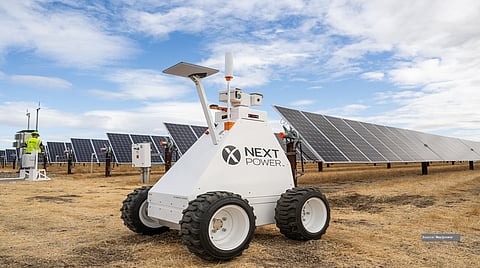


Cleaning strategies, particularly robotic systems, are influencing tracker configuration and design choices
1P trackers are increasingly preferred for compatibility with module-mounted robotic cleaners, while automation supports installation efficiency
Regional differences remain significant, with the importance of automation and cleaning varying across markets
Automation and cleaning compatibility are becoming important considerations in tracker design, although their relevance varies by region and project type. Cleaning strategy is gaining visibility as a design parameter, particularly with the increasing adoption of robotic systems. Sunchaser notes that the growing adoption of module-mounted robotic cleaners over the past 5 years has altered configuration preferences. As discussed in the tracker configuration article “Solar Tracker Designs Shift Toward Simpler Configurations”, while tractor-based cleaning historically favored 2P systems due to higher clearance, robotic platforms operate more effectively on 1P trackers. As a result, Sunchaser increasingly recommends 1P architectures for large-scale projects, describing cleaning compatibility as a critical engineering consideration.
Other suppliers focus on installation efficiency and broader operational automation. Solar Steel highlights simplified logistics, pre-assembly, and smoother field workflows as major development priorities. Rapid crew training and labor efficiency are also increasingly valued. Axial emphasizes that its trackers are compatible with several robotic-cleaning platforms and have been validated with multiple manufacturers. Beyond cleaning, the company emphasizes weather monitoring, early-event alerts, and regional availability of spare parts to support operational reliability (see No One-Size-Fits-All: Tracker Design Depends On Site Conditions).
Regional differences remain significant. Soltec observes that robotic cleaning plays a limited role in tracker selection in Europe and Latin America, where cleaning frequency is lower, and labor structures differ. In contrast, it is a more decisive factor in the Middle Eastern markets. Pre-assembly trends follow a similar pattern: it is gaining traction in high-labor-cost regions such as the United States, while customers in Brazil and much of Latin America show less interest due to comparatively lower labor costs.
The text is an edited excerpt from TaiyangNews’ Market Survey on Solar Trackers 2026, which can be downloaded for free here.
